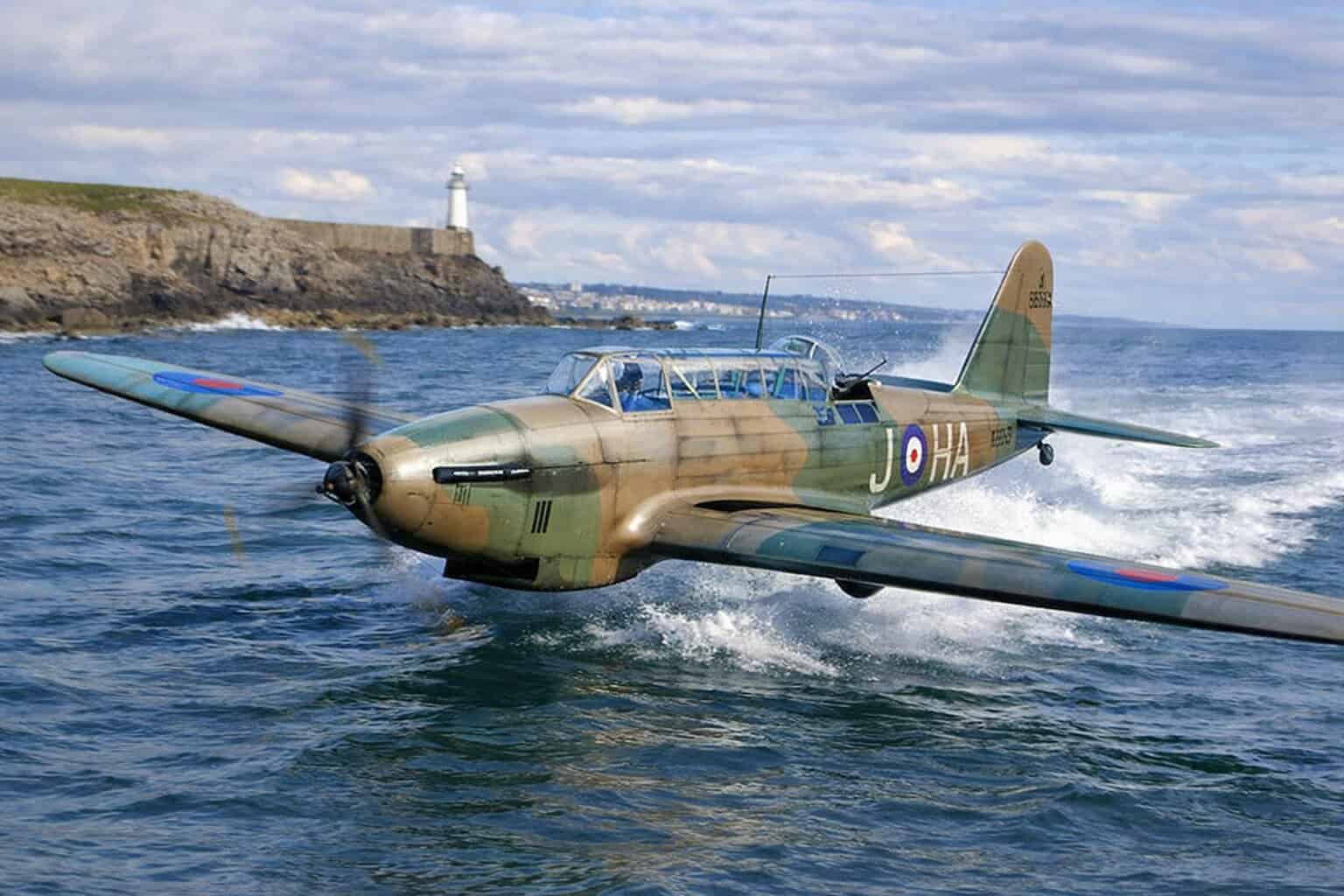
On 4 March 1941, a Fairey Battle Mk I from No. 7 Bombing and Gunnery School was lost in the Bristol Channel during what should have been a routine training flight from RAF Stormy Down. The aircraft, serial L5019, disappeared off the coast near Porthcawl, and all three men on board were killed. It was not a combat loss, but it was nonetheless part of the steady wartime toll paid by the Royal Air Force as crews trained for operational service.
A training sortie from RAF Stormy Down
L5019 had taken off from RAF Stormy Down in South Wales for a “Quarter Cross Over” gunnery exercise. Such sorties formed part of the demanding routine through which aircrew were prepared for service, and they were carried out in the same wartime conditions of pressure, urgency and risk that shaped the wider RAF effort.
According to the recorded account, the aircraft was seen at about 2,000 feet before it turned steeply. Witnesses then observed white smoke pouring from the machine as it dived into the sea around four miles off Hutchins Point, near Rest Bay, Porthcawl. The speed of the loss left little opportunity for recovery.
The men aboard
Three airmen were on board the Battle when it was lost. The pilot was Sergeant Leslie Alfred Tock. With him were Aircraftman 2nd Class John Staunch, an air gunner under training, and Aircraftman 2nd Class Raymond Shepherd, also an air gunner under training.
All three were killed on active service. Immediate searches were mounted by air and sea, but no trace of the aircraft or its crew was found. In consequence, the men are commemorated among those with no known grave. Their deaths stand as a reminder that the hazards of wartime flying extended far beyond enemy action.
The Fairey Battle and the burden of training
By 1941, the Fairey Battle was no longer prominent as a front-line day bomber as it had been at the start of the war, yet the type still had an important place in training and secondary duties. That role was essential, but it was not safe. Training units had to turn inexperienced men into competent operational crews, often at speed, and they did so with aircraft that could still be unforgiving in emergency conditions.
The loss of L5019 was one of several training accidents associated with Fairey Battle operations in South Wales during the period. That context does not diminish the individuality of this particular crash; rather, it places it within a broader pattern of wartime preparation in which training itself carried real danger.
A quiet but significant wartime loss
L5019 was later struck off charge on 1 April 1941. The administrative entry closed the RAF record of the aircraft, but it did not lessen the human cost of the accident. For The RAF Chronicle, this episode is worth remembering not because of a dramatic combat action, but because it reflects an essential truth of the air war: victory depended not only on famous operations and front-line battles, but also on the hazardous, often overlooked work of training. On this day, the loss off Porthcawl marked the deaths of three servicemen whose war ended before it properly began.