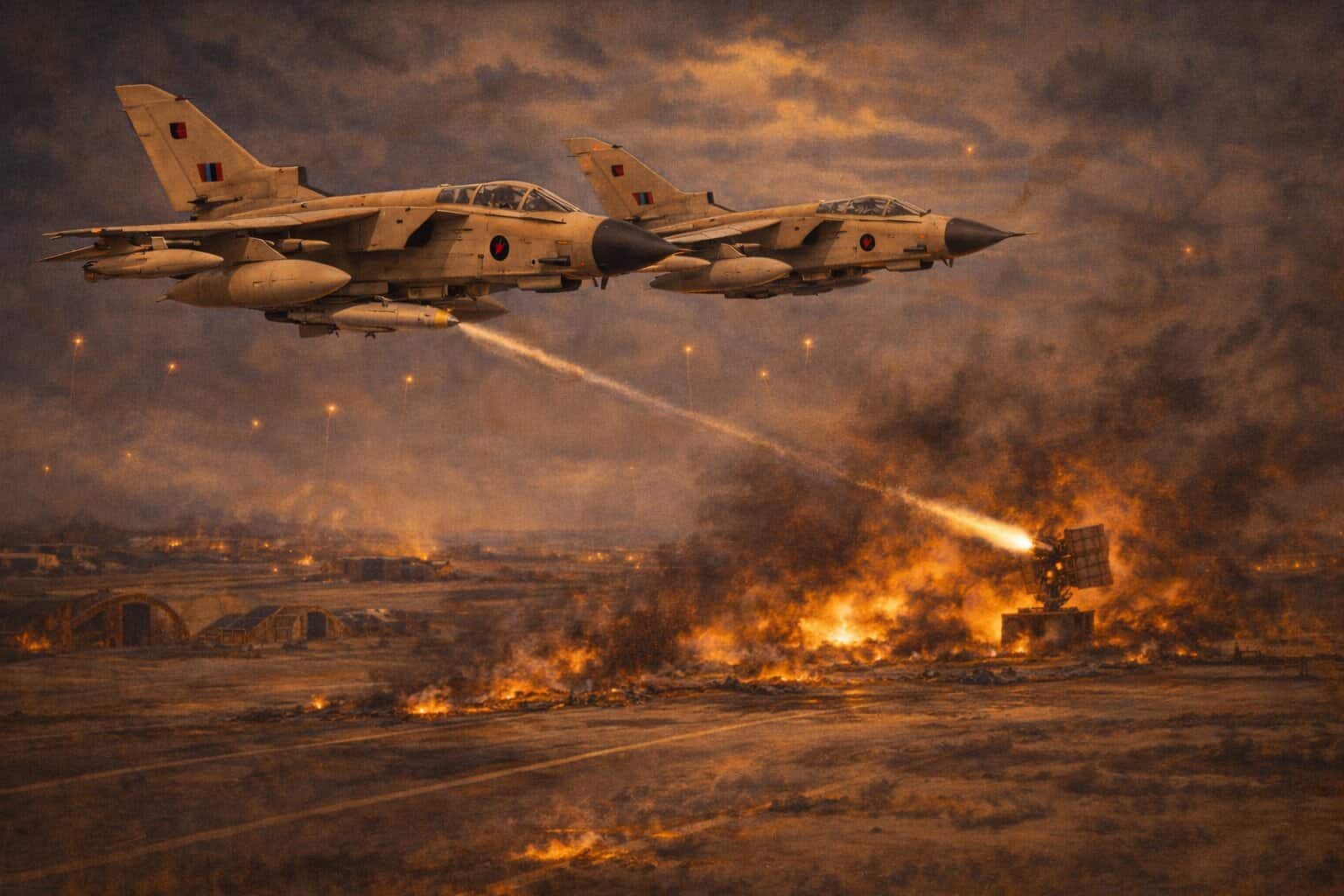
On 17 January 1991, Royal Air Force Tornado operations against Iraqi airfields continued as part of the coalition air campaign launched the previous day. Following the opening strikes of Operation Desert Storm, RAF crews maintained pressure on key installations, targeting runways, hardened aircraft shelters, and associated infrastructure. These missions were increasingly supported by the use of the ALARM anti-radiation missile, reflecting a developing emphasis on suppressing Iraqi air defences.
The first night of operations on 16 January had demonstrated both the effectiveness and the vulnerability of low-level airfield attacks. Iraqi airfields were heavily defended by radar-guided surface-to-air missiles, anti-aircraft artillery, and an integrated command network. Coalition planners recognised that sustained strikes would require continued efforts to degrade these defensive systems.
The Role of ALARM and Suppression of Defences
On 17 January, RAF Tornado aircraft equipped with the ALARM missile contributed to the suppression of enemy air defences. ALARM was designed to detect and home in on radar emissions, allowing aircraft to engage surface-to-air missile sites at range. The missile could also loiter in a parachute-assisted descent before diving onto an emitting radar source, adding a degree of flexibility in contested airspace.
The integration of ALARM into RAF operations signalled a shift in tactical emphasis. While initial Tornado missions had relied heavily on low-level penetration to reduce radar exposure, the growing use of anti-radiation weapons aimed to reduce the density and effectiveness of Iraqi missile batteries. By compelling Iraqi operators to shut down radar systems, coalition aircraft gained greater operational freedom.
Airfield attacks on 17 January continued under hazardous conditions. Tornado crews flew repeated sorties against selected targets, often at night, navigating through defended airspace. Despite increasing suppression efforts, Iraqi air defences remained active and capable of engaging incoming aircraft.
Losses and Operational Risk
The persistence of RAF operations during this phase carried considerable risk. On 18 January, during continuing airfield strike missions, another Tornado was shot down by Iraqi air defences. Both members of the crew were killed. The loss underscored the dangers inherent in attacking heavily defended targets during the early stages of the campaign.
These events prompted further reassessment of tactics. The initial reliance on very low-level attacks, particularly using the JP233 runway denial system, exposed aircraft to concentrated anti-aircraft fire around airfields. As suppression efforts took effect and Iraqi radar coverage was reduced, RAF aircraft increasingly adopted medium-altitude profiles and precision-guided munitions to reduce vulnerability.
Operational Impact
Despite the losses sustained, RAF Tornado operations contributed to the broader coalition objective of neutralising Iraqi air power. By striking runways and hardened shelters, the RAF sought to limit Iraqi aircraft dispersal and sortie generation. At the same time, ALARM-equipped aircraft played a role in weakening the integrated air defence network that protected these installations.
The cumulative effect of repeated attacks, combined with intensive coalition electronic warfare and strike operations, gradually reduced the effectiveness of Iraqi defences. Within days, coalition aircraft were operating with increased confidence at higher altitudes, employing laser-guided weapons against strategic targets across Iraq and occupied Kuwait.
Significance in the Wider Air Campaign
The operations of 17 January 1991 illustrate the intensity of the opening phase of Desert Storm. Air superiority was not achieved instantaneously but required sustained effort against a layered defensive system. RAF participation in these missions demonstrated Britain’s commitment to coalition operations and its ability to conduct high-risk strike and suppression tasks.
The losses sustained during these early days had a lasting impact on RAF operational practice. They reinforced the importance of suppression of enemy air defences, flexible tactics, and the integration of precision-guided weapons. The experience gained during this period informed subsequent RAF doctrine in later conflicts.
In the broader history of modern air warfare, the continued airfield attacks of 17 January and the loss on 18 January represent the realities of high-intensity coalition operations against a prepared adversary. They highlight the risks faced by aircrew and the evolving interplay between technology, tactics, and survivability in contemporary air campaigns.