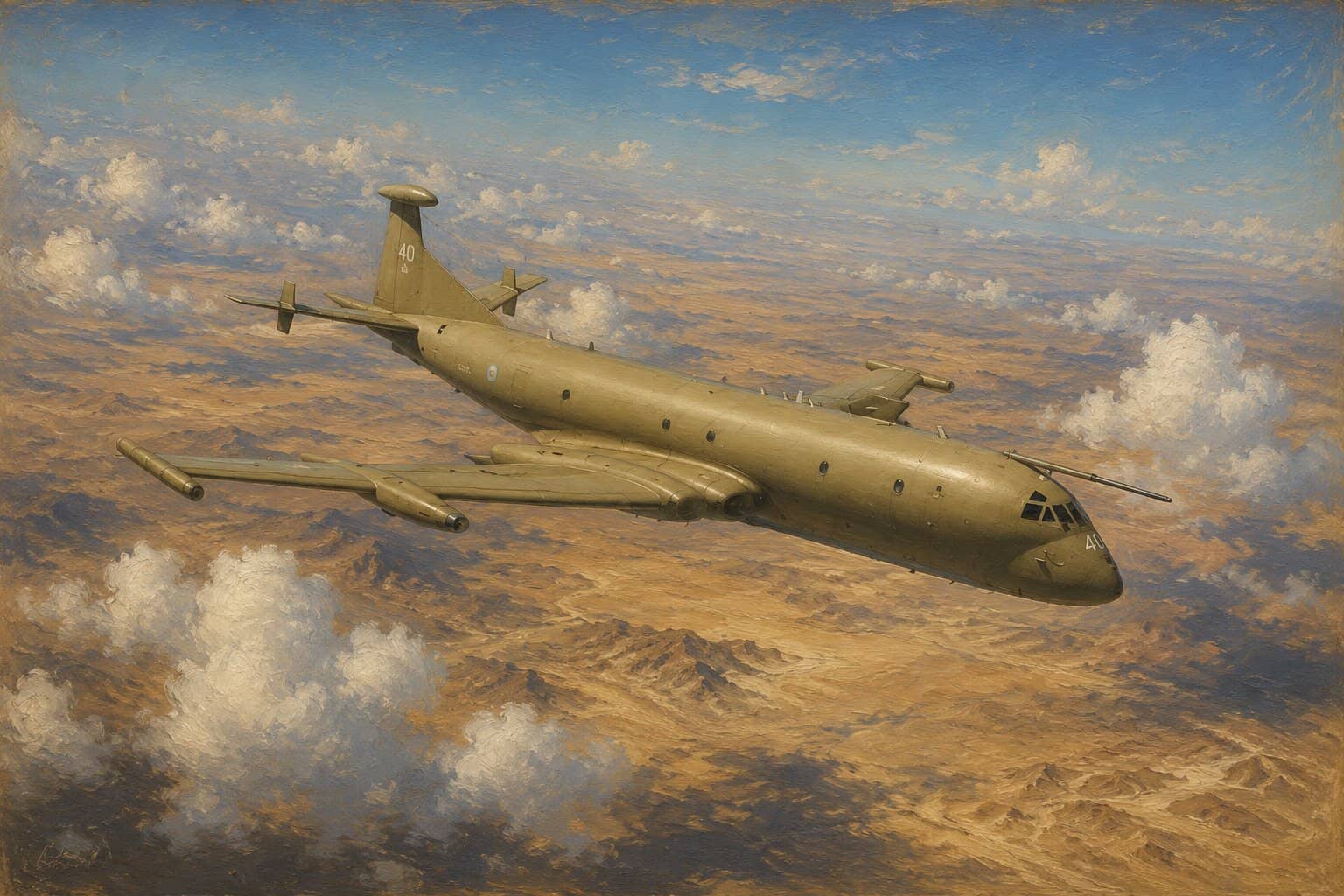
On 9 October 2001, RAF tanker aircraft refuelled US Navy carrier aircraft attacking targets in Afghanistan, while RAF reconnaissance and surveillance aircraft flew operational sorties in support of the campaign. These missions formed part of Operation Veritas, Britain’s contribution to the military response to the attacks of 11 September. They supplied fuel and information to a coalition operating across considerable distances.
The day’s operations placed RAF aircrew within an air campaign already under way. Coalition military action had opened on 7 October, with British participation including Royal Navy Tomahawk cruise-missile strikes. On 9 October, the RAF’s contribution centred on sustaining allied aircraft and gathering intelligence as operations continued against the Taliban and al-Qaeda.
Refuelling the carrier force
American carriers in the North Arabian Sea provided a major element of the striking force. Their aircraft faced long flights to landlocked Afghanistan, followed by the demands of reaching targets and returning to their ships. Air-to-air refuelling helped make those missions possible, extending the reach and endurance of aircraft launched far from the battlefield.
RAF tankers supported US Navy aircraft striking targets around Herat, Kandahar and Mazar-i-Sharif on 9 October. Among the carrier operations that day, F-14B Tomcats of VF-14, flying from USS Enterprise, undertook a long-range strike to Mazar-i-Sharif. Such missions illustrate the geographical demands behind the requirement for tanker support.
The refuelling effort combined land-based aircraft with the carrier force at sea. Tanker crews supplied an essential part of the operation between launch and recovery, allowing strike aircraft to carry out tasks deep inland. Their contribution depended on the coordination of aircraft with different departure points, operating requirements and flight endurance.
Britain’s enabling aircraft
Operation Veritas was the British contribution to the wider US-led Operation Enduring Freedom. The RAF brought established capabilities in aerial refuelling, reconnaissance and surveillance to this coalition effort. Each addressed a practical requirement: fuel for distant operations, information about the theatre, and the ability to assess developments as the campaign unfolded.
Vickers VC10 and TriStar aircraft provided the RAF’s tanker capability during the opening campaign. The wider British enabling force also employed specialist reconnaissance and surveillance aircraft, including the Nimrod R1 and Canberra PR9. These types served different information-gathering purposes, complementing the fuel supplied by the tankers.
The scale of the work grew quickly. By 16 October, the RAF had flown almost 50 reconnaissance and air-to-air refuelling sorties since these operations began on 9 October. Tanker missions lasted several hours, and individual sorties could refuel multiple aircraft. This sustained activity gave the coalition access to a specialised British capability throughout its opening operations.
Canberra PR9 aircraft also offered detailed photographic reconnaissance. Their planned tasks included targeting, assessment of bomb damage and identifying refugee movements within Afghanistan. Information gathered from the air could therefore assist both military planning and the organisations attempting to deliver humanitarian relief.
Reach and information
The operations of 9 October demonstrated the close relationship between striking power and the aircraft that sustained it. Carrier aircraft needed fuel to cover the distance to Afghanistan; commanders needed reconnaissance and surveillance to understand the operational situation. RAF crews contributed directly to both requirements.
For Britain, these missions established an important pattern within the opening campaign: specialist RAF aircraft working alongside American forces to sustain long-range operations. The immediate result was practical and operational. Allied aircraft received fuel for their missions, while British reconnaissance and surveillance sorties added to the information available to the coalition. Reach, endurance and intelligence were integral parts of the air effort over Afghanistan.