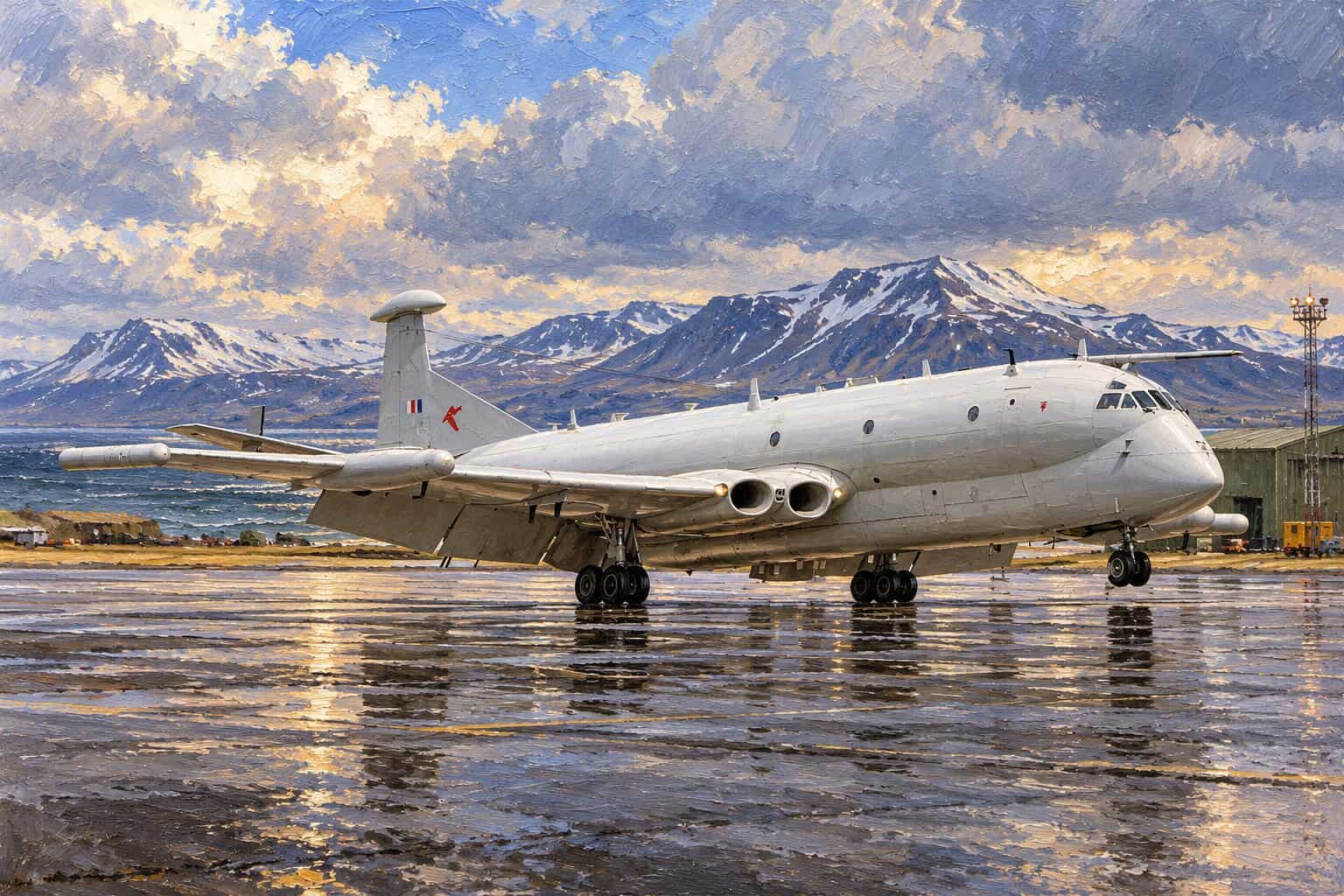
On 21 November 1973, the Icelandic Government lifted its ban on Royal Air Force aircraft using Icelandic airfields following the diplomatic settlement of the Second Cod War. The decision restored access that had been withdrawn during the Anglo-Icelandic fisheries dispute and marked a further step in the easing of relations between the two countries.
For the RAF, the change concerned permission to use airfields in an important North Atlantic location. Its fishery-protection flying during this dispute had already ended in October as diplomatic talks progressed. November’s decision addressed a separate consequence of the confrontation: the restrictions placed on British military aviation in Iceland.
Airfield access and the fisheries dispute
The Second Cod War centred on Iceland’s extension of its fisheries limit to 50 miles and British fishing activity within the proclaimed zone. The dispute brought Icelandic government vessels and British trawlers into a confrontation in which the positions and movements of ships mattered directly to the British response.
The RAF’s involvement developed through maritime surveillance. On 17 May 1973, Nimrod aircraft began patrols to establish the positions of Icelandic gunboats and British trawlers within the zone. This gave the air service a defined observational role in a dispute being played out at sea and through diplomatic exchanges.
Three days later, on 20 May, the Icelandic Government announced that British military aircraft would cease to be permitted to use Icelandic airfields. Airfield access had become part of the wider dispute. The restriction placed a practical aviation issue alongside the competing positions over fishing rights.
The RAF’s surveillance commitment
The Hawker Siddeley Nimrod provided the RAF’s maritime-patrol contribution. Its work in this episode focused on locating the vessels involved, linking airborne observation with the circumstances of the fishing fleet and Icelandic enforcement activity.
The commitment also required attention to the use of aircraft resources. From 20 July, Bristol Britannia transport aircraft flew a small number of fishery-protection sorties to conserve Nimrod flying hours. The use of a transport type for some of this work shows how the RAF distributed a specific surveillance task across available aircraft during the dispute.
These flights formed part of the operational background to the eventual settlement. Their purpose and duration were tied to the fisheries confrontation, while permission to use Icelandic airfields remained a matter for the Icelandic Government.
From the final sortie to restored access
Following the opening of talks between the British and Icelandic governments, the RAF flew its final fishery-protection sortie of the Second Cod War on 3 October 1973. The end of that flying commitment preceded the restoration of airfield access by several weeks.
On 21 November, the diplomatic settlement enabled Iceland to lift the ban affecting RAF aircraft. The immediate outcome was the removal of the access restriction imposed during the confrontation. The sequence gave the RAF two distinct milestones in the dispute’s conclusion: the end of fishery-protection sorties and the subsequent restoration of permission to use Icelandic airfields.
For British military aviation in the North Atlantic, the episode demonstrated the connection between operational activity and diplomatic relations. Aircraft availability, flying hours and surveillance requirements shaped the air contribution; governmental agreement determined access to Icelandic airfields. The November decision resolved that access issue as relations emerged from the Second Cod War.