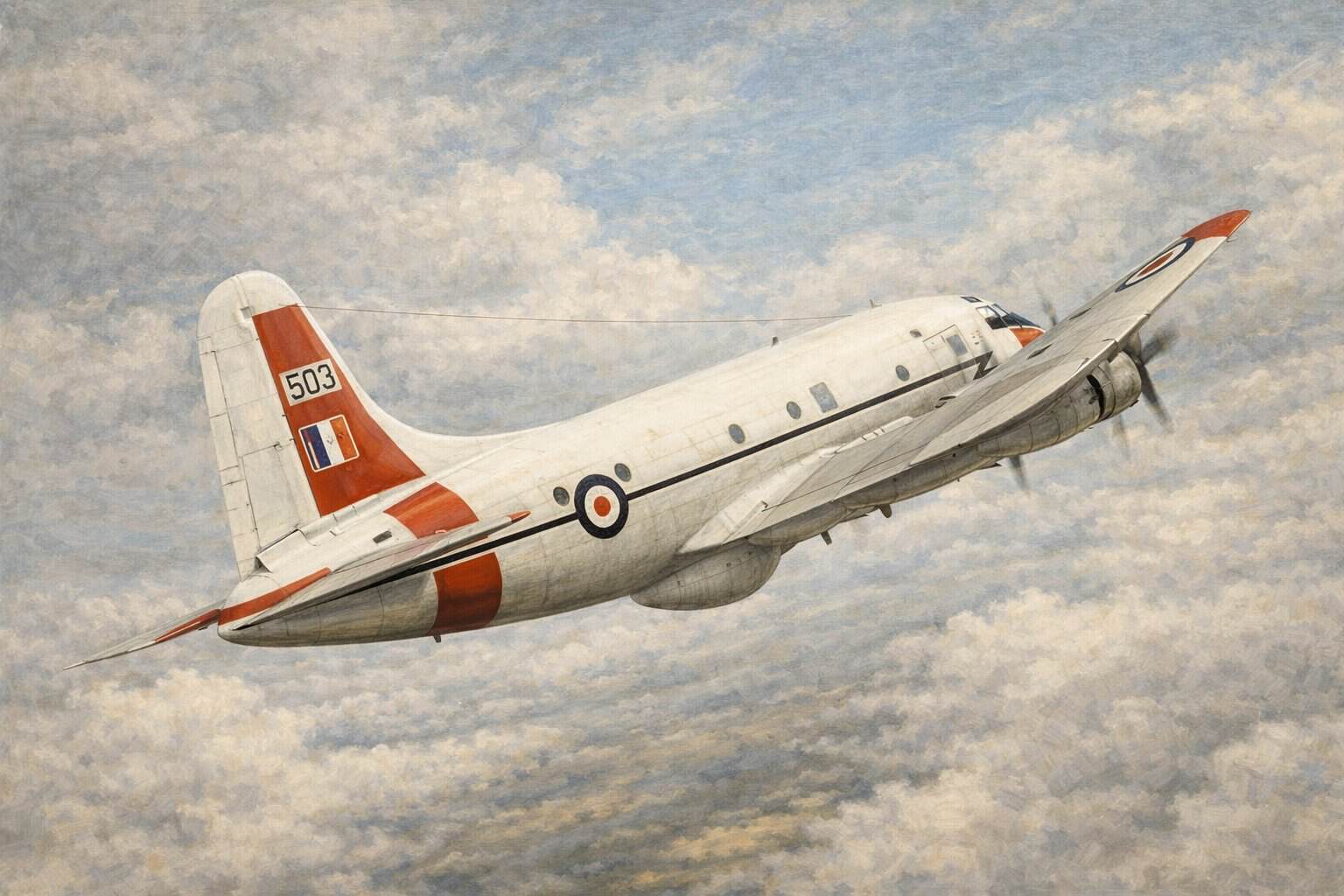
On 19 April 1948, Britain and France formalised a military air transport agreement allowing reciprocal overflight and servicing arrangements. At first glance, the measure may seem administrative rather than dramatic, but such agreements are often crucial to real air power. Aircraft do not operate effectively across borders without legal permission, practical support and established procedures. In the uncertain early Cold War environment, those foundations mattered deeply. The agreement deserves attention as a sign of how Western European defence cooperation was being rebuilt after the Second World War.
Practical cooperation after war
The late 1940s were a period of transition. Europe was still recovering from a devastating conflict, yet strategic tensions were already hardening into the Cold War. In that setting, military planning increasingly depended upon the ability of allied forces to move quickly, coordinate efficiently and support one another across national frontiers. Air transport was central to that effort. It connected capitals, headquarters, bases and deployed units with a speed no other means could match. But speed in the air was only useful if governments also created the framework within which it could be exercised.
Reciprocal overflight rights reduced delay and uncertainty. Servicing arrangements mattered just as much, because an aircraft that can land but not be fuelled, maintained or turned round is only partly useful. By establishing these understandings formally, Britain and France were doing more than tidying up procedure. They were acknowledging that future security would require partnership expressed in routine movement as much as in high policy statements.
Logistics as strategy
For the RAF, agreements of this kind underpinned flexibility. Transport aircraft, liaison flights, and wider military air movements all depended on reliable access and support. In any emergency, the ability to cross airspace lawfully and to receive assistance on arrival could save critical time. That was true in peace and even more true in crisis. The 1948 agreement illustrates a basic but sometimes overlooked point: logistics and diplomacy are part of operational power. Without them, aircraft remain constrained by the limits of unilateral action.
The Anglo-French dimension is also noteworthy in political terms. Relations between the two countries had not always been simple, and the post-war settlement required trust to be rebuilt in practical ways. A transport agreement cannot, by itself, define an alliance, yet it forms part of the connective tissue from which enduring cooperation is built. Long before multinational air arrangements became common, such bilateral measures were helping to create the habits of interoperability.
Remembering 19 April 1948 means remembering that air history is not only written in combat reports or famous raids. It is also written in agreements that enable movement, in permissions that reduce friction, and in systems that allow forces to operate together without delay. The Anglo-French military air transport agreement was one of those quietly important steps. It helped turn post-war partnership into something practical, and in doing so strengthened the foundations on which later RAF mobility would depend.