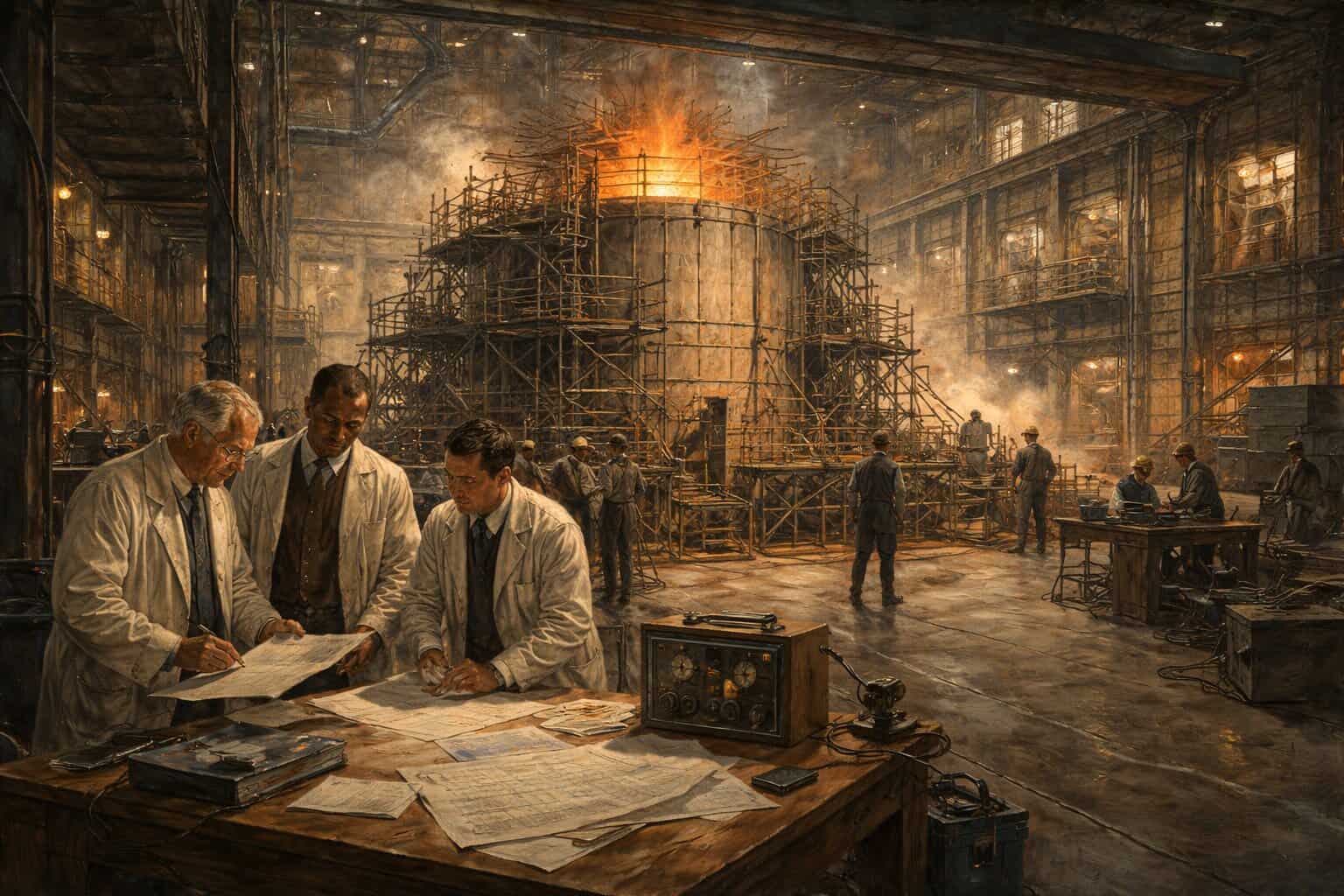
On 23 January 1946, the British Cabinet approved plans to construct Britain’s first atomic pile and to establish a centralised nuclear research facility at Harwell in Oxfordshire. The decision marked a decisive step in the United Kingdom’s post-war atomic programme and had significant implications for the future development of air power and strategic policy.
In the immediate aftermath of the Second World War, Britain faced a rapidly changing strategic environment. The use of atomic weapons against Japan in August 1945 had demonstrated the transformative power of nuclear technology. British scientists had been closely involved in wartime atomic research through collaboration with the United States under the Manhattan Project. However, post-war legislative changes in the United States restricted further nuclear cooperation, compelling Britain to pursue an independent path.
Establishing the Atomic Programme
The Cabinet decision of 23 January authorised the development of a domestic atomic research infrastructure. Central to this plan was the construction of an experimental nuclear reactor, commonly referred to as an atomic pile, and the establishment of a dedicated research centre at Harwell. The site was selected for its existing technical facilities and relative security.
The atomic pile was intended to enable controlled nuclear reactions for research purposes, providing the foundation for further development in both civil and military applications. While the immediate emphasis lay on scientific progress, the strategic context of early Cold War tensions made the potential military implications clear.
Although the Royal Air Force was not directly responsible for reactor construction or atomic research, the development of atomic weapons would inevitably influence RAF planning. Air delivery was, at that time, the primary means of deploying atomic weapons, and the integration of such capability into Britain’s defence posture would require significant air force adaptation.
Strategic Context and Policy Implications
The Cabinet’s approval reflected a determination to maintain Britain’s position as a major power in the emerging post-war order. Possession of atomic capability was viewed as central to national security and international standing. The decision linked scientific research with broader defence and foreign policy objectives.
For the RAF, the implications were substantial. The future of strategic bombing doctrine would increasingly intersect with nuclear deterrence concepts. Aircraft capable of carrying heavier and more specialised ordnance would become central to long-term planning. Though in January 1946 such developments were still prospective, the trajectory was set.
The approval of atomic research also required new administrative and organisational structures. Coordination between scientific authorities, government departments, and the armed services became a defining feature of Britain’s early nuclear effort.
Immediate and Long-Term Effects
Construction and research activities at Harwell proceeded in the following years, laying the groundwork for Britain’s eventual development of atomic weapons. The first British atomic test would occur later in the decade, marking the culmination of the policy direction established in early 1946.
The RAF’s strategic role evolved accordingly. As nuclear weapons became integral to national defence policy, air-delivered capability became a core mission. This shift influenced aircraft design, basing arrangements, and operational doctrine in the late 1940s and 1950s.
The Cabinet’s decision also reinforced the growing interdependence of scientific innovation and military planning. Air power, once defined primarily by conventional bombing and fighter operations, would soon be shaped by the demands of nuclear deterrence.
Significance in the Wider Air War Context
Although 23 January 1946 did not mark a combat operation, it represents a pivotal moment in the history of British military aviation. The approval of atomic research signalled the beginning of a strategic transformation that would redefine the RAF’s purpose in the Cold War era.
In the broader context of air power development, the decision underscored the growing importance of technological advancement in determining military capability. The era of the atomic weapon would elevate the strategic bomber to unprecedented prominence, altering the balance between offence and defence in global security calculations.
The events of this day stand at the intersection of science, policy, and air power. By authorising the construction of Britain’s first atomic pile and establishing Harwell as a research centre, the Cabinet set in motion developments that would shape the RAF’s strategic role for decades to come.