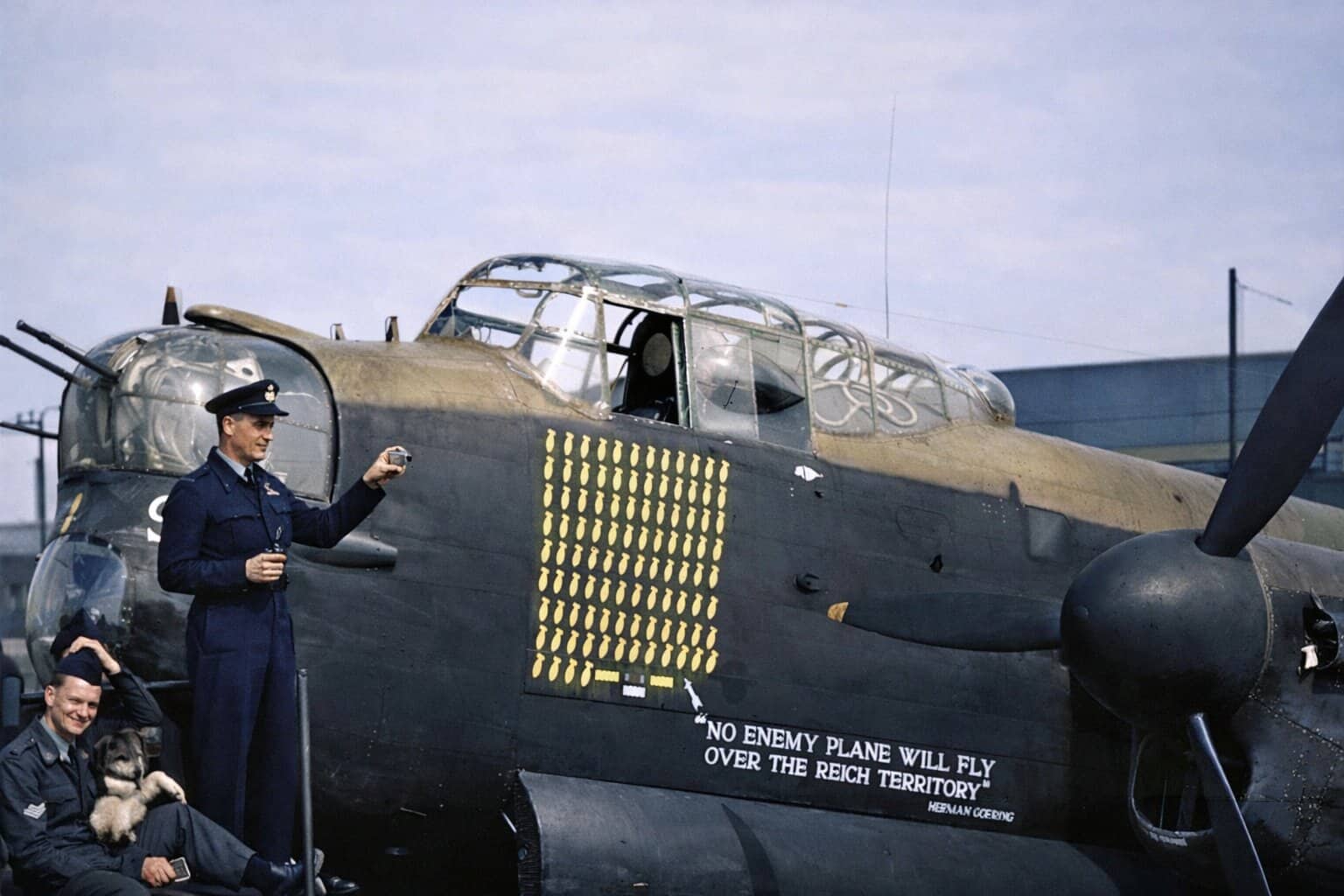
On 23 April 1945, Avro Lancaster R5868, better known as ‘S for Sugar’, flew its 137th and final operational mission in an attack on German shipping in Flensburg harbour. Few RAF aircraft have acquired such an enduring place in public memory. Most wartime bombers were expended, scrapped or lost to time, but S for Sugar survived to become a tangible link to Bomber Command’s vast and costly campaign. Its last sortie marked not only the end of an operational career, but the beginning of a second life as a witness to history.
A veteran aircraft at war’s end
By late April 1945, the air war in Europe was nearing its conclusion, yet operations continued against selected targets. German resistance had not entirely ceased, and the RAF remained active in applying pressure. That S for Sugar was still flying at this late stage speaks to the intensity and longevity of Bomber Command service. To complete 137 operations was exceptional. It implied repeated exposure to combat, mechanical wear, danger from enemy action and the relentless demands of sustained operational use.
An aircraft’s reputation, however, is never solely its own. Behind every mission stood a succession of crews, ground staff and support personnel who kept it airworthy and took it into danger. S for Sugar’s survival should therefore be understood as a collective story. It reflects the labour of maintenance teams as much as the skill and nerve of aircrew. In RAF history, famous aircraft can sometimes appear as solitary legends; in reality, they are records of many people’s service layered over time.
From operational machine to memorial object
The final mission to Flensburg harbour gave S for Sugar a fitting place in the closing days of the war. Yet its greater historical significance lies in what happened afterwards. Preservation allowed the aircraft to outlive the generation that flew it and to serve as a material reminder of Bomber Command’s experience. That matters because the bomber offensive remains one of the most debated and emotionally charged parts of RAF history. A surviving Lancaster provides scale, presence and immediacy that documents alone cannot fully supply.
Visitors encountering S for Sugar are not simply looking at aluminium and rivets. They are confronting the physical reality of a campaign fought over years, at night, under extreme danger and at enormous human cost. The aircraft embodies endurance, but it also prompts reflection on loss, sacrifice and the burdens carried by bomber crews. Preservation does not simplify the story; it makes it harder to ignore.
For that reason, 23 April 1945 deserves remembrance well beyond the operational details of a single attack on shipping. It marks the moment an aircraft ceased to be merely one bomber among many and began its long afterlife as one of the RAF’s most recognised survivors. S for Sugar’s last mission closed a remarkable combat record. Still, it also ensured that later generations would have a direct and powerful connection to the world of wartime Bomber Command.