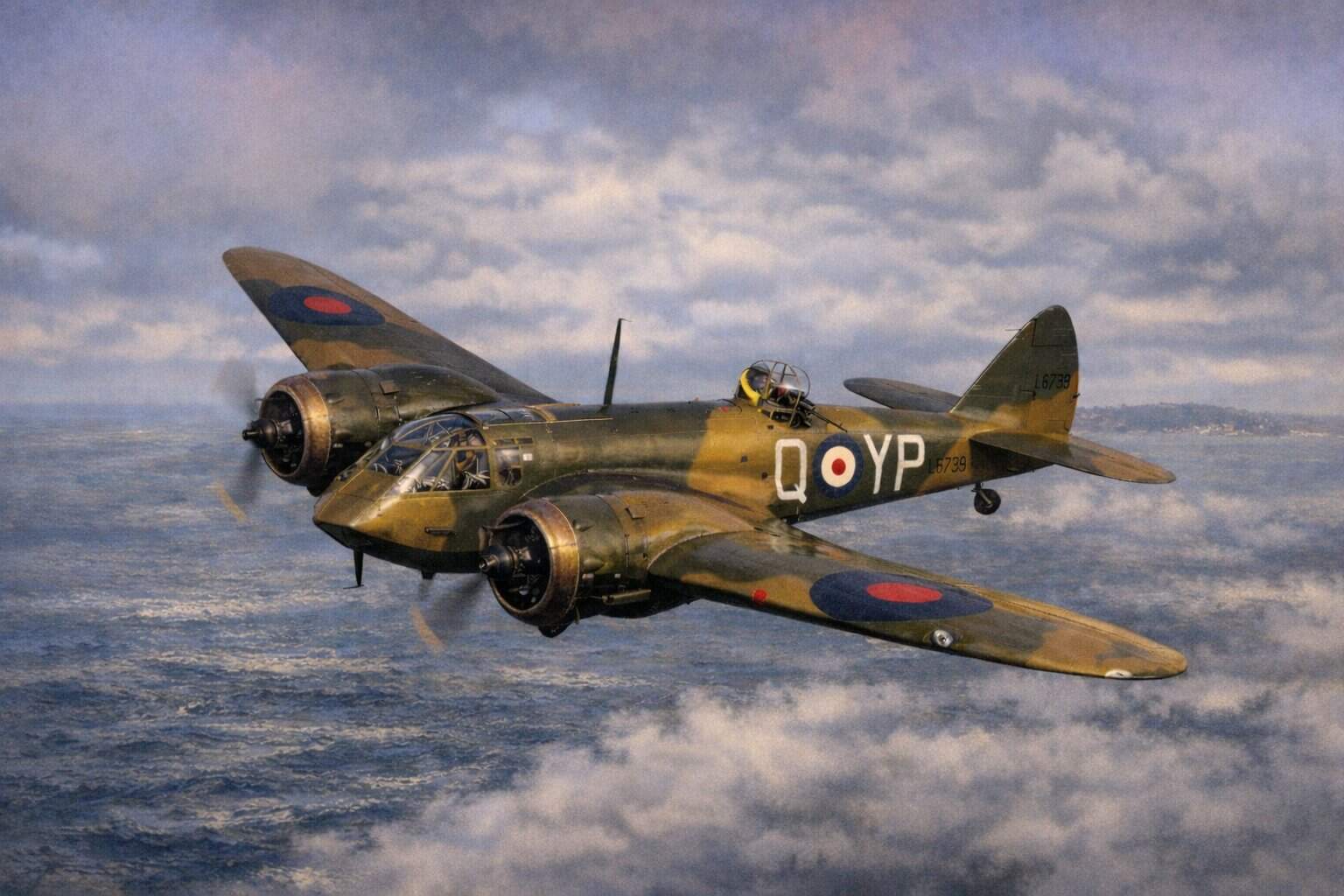
On 10 January 1941, Bristol Blenheims of No. 114 Squadron attacked the Forêt de Guînes in northern France, escorted by nine squadrons of RAF fighters. The raid became known as the first Circus operation, a new mission type that paired a genuine bombing target with a deliberate attempt to draw the Luftwaffe’s fighters into combat over occupied territory.
The mission came at a turning point in the air war over Western Europe. The Battle of Britain had ended the previous autumn, and German daylight raids on Britain had fallen away sharply. Fighter Command, rather than settling back into a purely defensive role, was looking for ways to carry the fight across the Channel and keep pressure on the enemy through the winter months.
Why the RAF went on the offensive
With the immediate threat of invasion receding, RAF planners turned their attention to how Fighter Command could contribute to an offensive strategy. Standing patrols and defensive scrambles had suited the summer of 1940, but they gave the RAF little chance to choose when and where it fought. A new approach was needed, one that put the initiative back in British hands and forced the Luftwaffe to respond on RAF terms.
The answer was to send bombers across the Channel against targets close to the coast, protected by fighter numbers far greater than the bombing task alone required. If German fighters rose to defend against the raid, RAF pilots could engage them in conditions largely of Fighter Command’s own choosing, with the advantage of numbers and, often, of altitude.
Other offensive fighter operations included Rhubarbs, small-scale sorties against targets of opportunity; Circus operations instead combined bombers with a large fighter escort. Adding a bomber element gave the Luftwaffe a target it could not afford to ignore, and the raid was built around a fighter force large enough to make the resulting battle work in the RAF’s favour.
How the first Circus worked
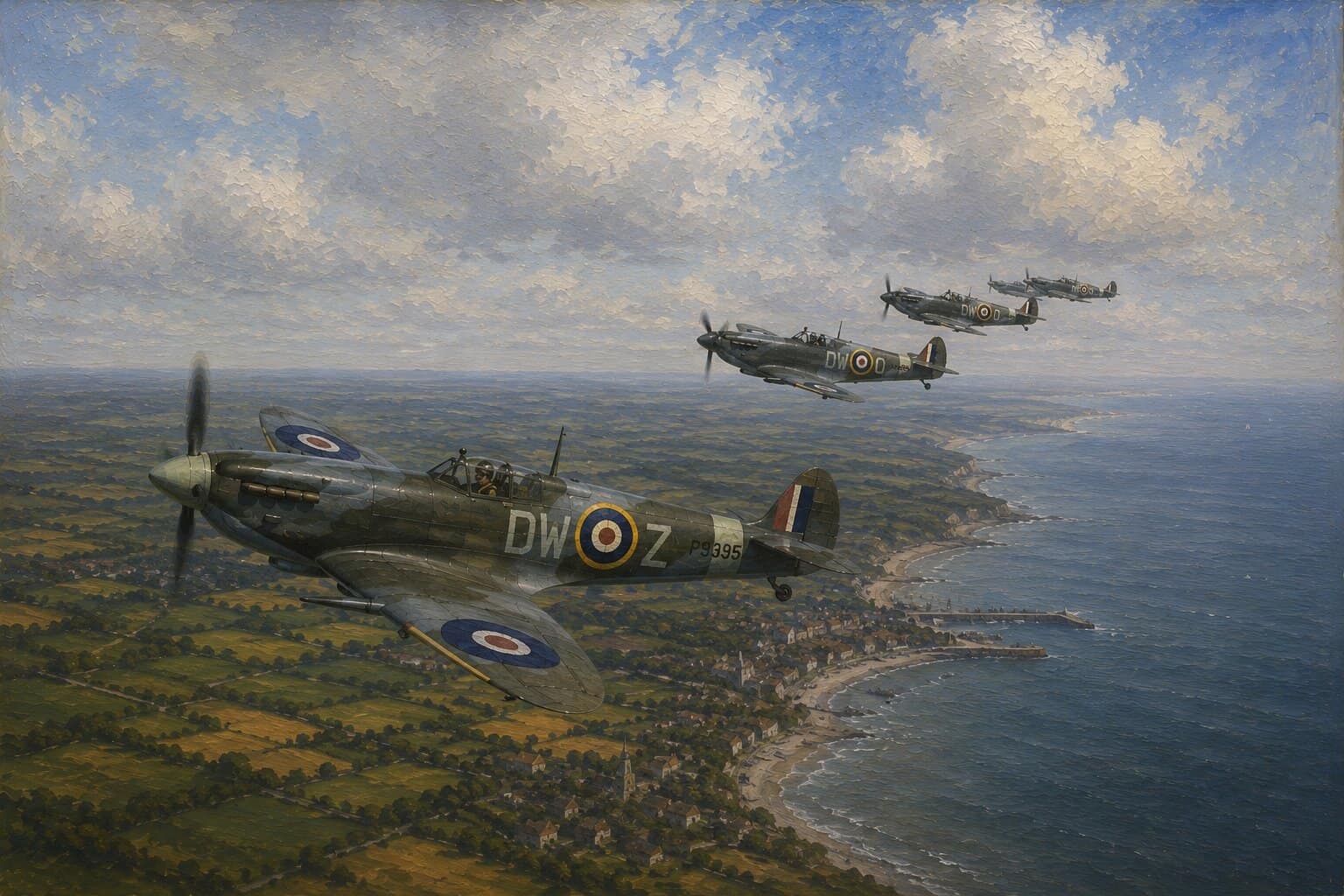
A Circus operation combined a small bomber force, flying by day, with a large fighter escort assembled specifically to protect it and to fight. The bombers were sent against real military or industrial objectives, but the wider purpose of each raid was to compel the Luftwaffe into the air. By repeatedly forcing this choice on German fighter units based in northern France, the RAF hoped to wear down enemy strength, sharpen its own escort and formation tactics, and demonstrate that Fighter Command could operate offensively as well as defensively.
For the first attempt, that meant a modest bomber element well within the fighters’ capacity to protect. No. 114 Squadron’s Blenheims, a light bomber type that had already shown itself vulnerable when operating without heavy protection, supplied the bomber element, while nine fighter squadrons flew in support. The scale of that escort reflected the operation’s priorities: engaging the Luftwaffe carried as much weight, in the RAF’s planning, as the bombs the Blenheims dropped.
What happened over Guînes
The Blenheims crossed the Channel under their heavy escort and made for the Forêt de Guînes, an area used by German forces and judged suitable for a raid of this size. The bombers released their bombs over the target, although the extent of the damage is unclear.
The Pas-de-Calais area, where Guînes lies, was defended by experienced Luftwaffe fighter units. The raid introduced the essential pattern of the Circus offensive: bombers attacking a genuine target under a large fighter escort, with the additional purpose of drawing German fighters into combat. It established a new RAF method for creating opportunities for offensive air combat over occupied Europe.
What Circus operations became
The raid on 10 January 1941 was a small operation, but it established a pattern that Fighter Command would repeat many times over the course of the year. Circus operations became a regular feature of the RAF’s daylight activity over northern France during 1941, growing in scale and frequency as the tactics were refined through experience.
Taken together, these operations marked the RAF’s shift from the defensive fight of 1940 to a sustained offensive posture over occupied Europe, a posture that would continue to develop, and to draw debate over its costs and benefits, as the war went on. The first Circus, modest as it was, marked an important step in Fighter Command’s developing cross-Channel offensive.