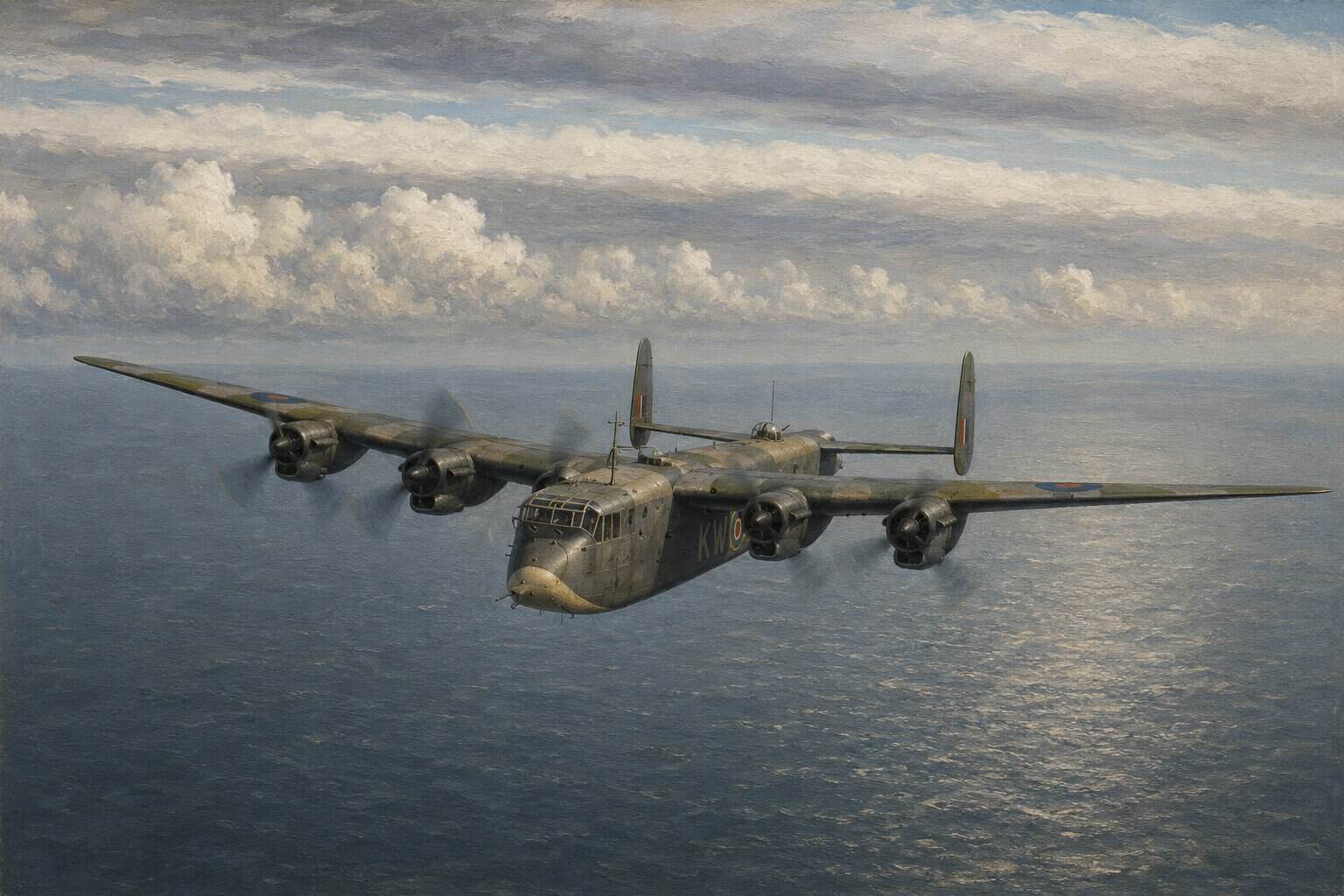
The Berlin Airlift became one of the first major tests of Cold War resolve and one of the clearest demonstrations that air mobility could carry strategic weight without direct combat. For the Royal Air Force, the operation was not simply a transport effort on the edge of Europe. Under Operation Plainfare, it became a sustained demonstration that disciplined flying, maintenance, scheduling and coalition organisation could help hold a political position under intense pressure.
Background
When the Soviet Union blocked land and water access to West Berlin in June 1948, the Western powers were forced into a decision that carried military, political and symbolic consequences. Berlin lay deep inside the Soviet zone of occupation, yet the city remained divided between the victorious Allies. If Britain and its partners accepted the isolation of the western sectors, the result would be more than a local setback. It would suggest that pressure short of open war could force retreat from a major political commitment.
An airlift became the practical alternative to either withdrawal or armed confrontation on the ground. This decision turned transport aviation into the centre of policy. Aircraft had to carry food, fuel, and other essentials in sufficient quantities to keep the city functioning, while governments had to prove that such an effort could be sustained for as long as necessary.
Operation Plainfare
The British contribution took shape as Operation Plainfare, carried principally by RAF Transport Command within the wider Allied airlift system. The early effort relied heavily on the Douglas Dakota, an aircraft whose wartime service had already shown its value in sustained transport work. As the scale of the task increased, larger aircraft, including the Avro York and Handley Page Hastings, became increasingly important to the British share of the operation.
The character of the work was exacting rather than dramatic. Aircraft moved through tightly regulated air corridors on fixed schedules, with little room for delay and no value in improvisation for its own sake. The pressure fell on turnaround times, loading efficiency, maintenance standards and the ability of crews to continue flying through poor weather and relentless repetition. In that sense, the Berlin Airlift was a severe organisational test. It demanded that transport flying be treated with the same seriousness as any offensive operation.
This was also a coalition exercise in the fullest sense. British and American aircraft were part of one continuous flow into Berlin, and the success of the effort depended on disciplined coordination rather than national display. The RAF contribution mattered not only for the tonnage it carried, but also for the way it helped sustain the regularity on which the whole system depended.
Results And Significance
The airlift did not win by dramatic destruction or battlefield manoeuvre. Its achievement lay in endurance. Over many months, the Western Allies demonstrated that West Berlin could be supplied by air on a scale sufficient to defeat the blockade's purpose. When the Soviet Union lifted the blockade in May 1949, the political meaning of the result was clear. Pressure had been met without surrender and without immediate escalation into war.
For the RAF, the operation confirmed that transport power was neither a secondary nor merely an administrative function. The Berlin Airlift showed that air transport could shape strategic outcomes in its own right. Aircraft such as the Douglas Dakota, Avro York and Handley Page Hastings were not supporting a separate campaign. They were central to the campaign itself. The lessons reached beyond Berlin, reinforcing the importance of capacity, reliability, and trained crews in any future crisis in which distance and speed would matter more than firepower alone.
Wider Cold War Context
The wider significance of the Berlin Airlift lay in what it suggested about the emerging Cold War. It showed that the confrontation between East and West would not be defined only by bombing plans, fighter strength or the threat of general war. It would also depend on whether alliances could organise resources, maintain political will, and use air power flexibly, short of open conflict.
For Britain, this helped place the RAF inside a new strategic landscape. Wartime experience in air transport had already created the foundations, but Berlin demonstrated how those capabilities could serve diplomacy, deterrence and alliance credibility in peacetime crisis. Operation Plainfare belongs not only to the history of the blockade itself, but also to the broader development of post-war RAF air mobility. It marked a moment when transport aircraft ceased to be seen merely as supporting assets and became recognised as instruments of strategy in their own right.