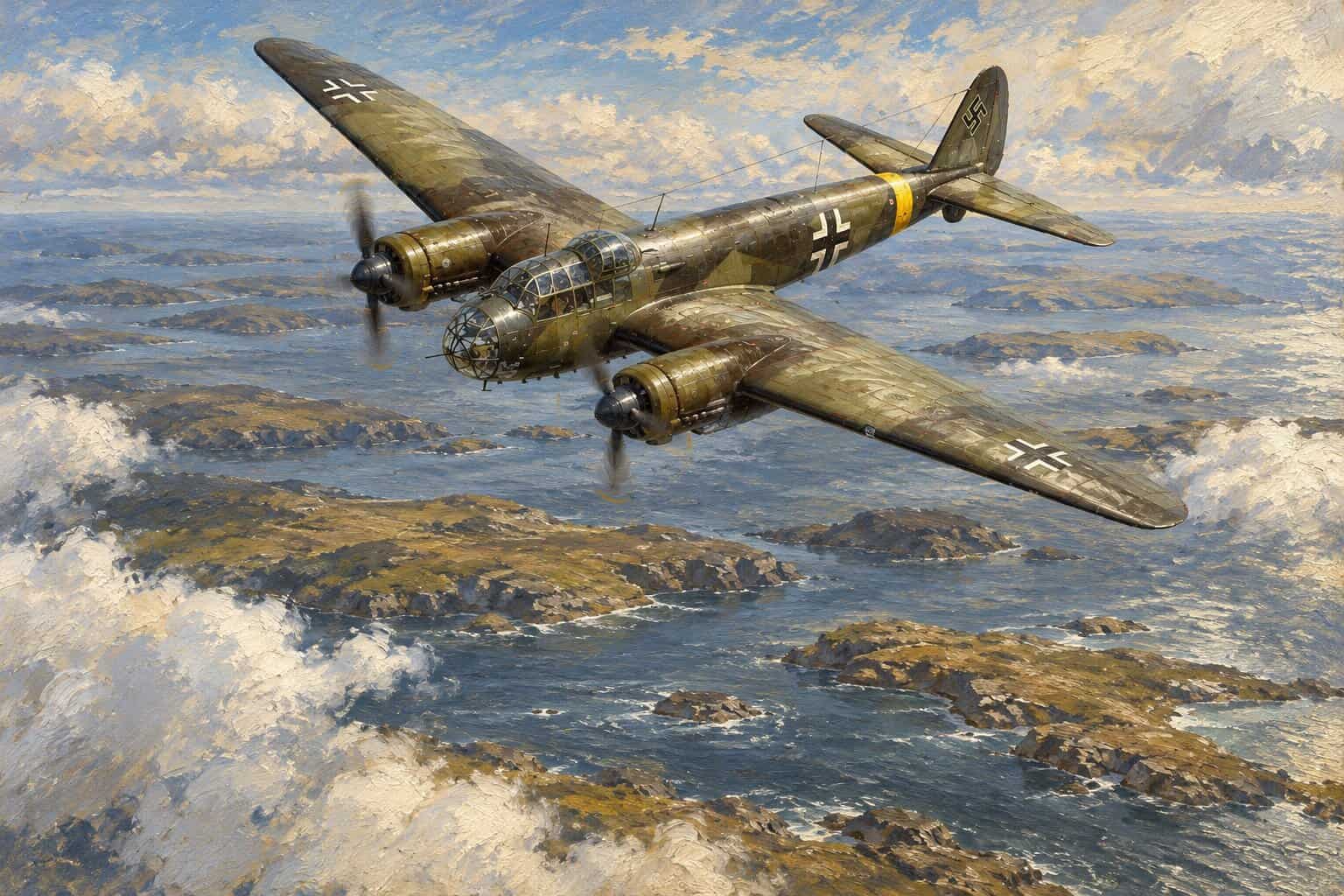
On 13 November 1939, four German aircraft raided Shetland, dropping bombs at Sullom and into the surrounding sea. Flying boats and naval vessels in Sullom Voe were the intended targets. The attack brought the northern maritime war directly to a small agricultural community, leaving bomb craters that attracted attention far beyond the islands.
The immediate military damage was negligible. Within days, the Government had placed the raid’s basic facts before Parliament, while photographs and newspaper coverage gave the episode a wider public life. Its history combines a documented attack on a strategically important anchorage with a distinctive story of wartime publicity.
Military targets in Sullom Voe
Sullom lay in Northmavine, beside waters used by British maritime forces. The geographical distinction is important: the settlement was the location of bomb impacts on land, while the voe contained the flying boats and ships which the attackers sought to hit.
Shetland’s position gave it considerable value in the developing air and naval war. Flying boats could use sheltered water as a base for operations over the surrounding seas, and naval vessels could use the anchorage while serving on northern patrols. Together, these activities placed Sullom Voe within the network supporting British reconnaissance and maritime security.
For RAF Coastal Command, access to northern waters formed part of the practical task of watching sea routes and supporting the war at sea. The military presence around Sullom therefore reflected the islands’ operational usefulness. Aircraft and ships gathered in such waters also presented targets for German reconnaissance and bombing.
Twenty bombs and negligible damage
Four German aircraft attacked Shetland on 13 November, encountering heavy British anti-aircraft fire. The raid was subsequently discussed in Parliament, where its limited damage and absence of casualties were confirmed.
The statement recorded twelve bombs falling on land and eight in the sea. It described the damage as negligible and reported that everyone had escaped injury. Those figures establish the scale and immediate outcome of the raid: bombs had reached the islands and their waters, while the attack’s destructive effect remained slight.
Bomb craters at Sullom marked where the attack had struck land. The intended military targets lay nearby in Sullom Voe, where flying boats sheltered alongside naval vessels. These records connect the visible marks left on land with the military activity in the adjacent anchorage.
The rabbits in the photograph
The raid became headline news, and its publicity produced an enduring local story. A widely circulated photograph purported to show rabbits killed in the bombing. The scene had actually been staged using rabbits purchased from a butcher in Lerwick.
That account places the image within the history of wartime reporting and popular humour. The purchased rabbits supplied a memorable visual story, giving an attack with negligible damage an unusually durable place in public recollection.
The song “Run, Rabbit, Run” later became associated with the episode. Its performance history establishes a separate origin: it had opened at the London Palladium on 11 October 1939, a month before the raid. The connection belongs to the subsequent folklore surrounding the bombing.
Shetland’s place in the northern war
The events of 13 November exposed the close proximity of civilian life and maritime operations in Shetland. Bombs fell around a rural settlement because nearby waters sheltered aircraft and ships engaged in Britain’s war effort.
Sullom’s craters and the Government’s assessment preserve the raid’s limited immediate consequences. The intended targets explain its operational setting: sheltered anchorages and flying-boat facilities helped sustain British activity across the northern seas, and their protection formed part of the developing air and naval struggle.