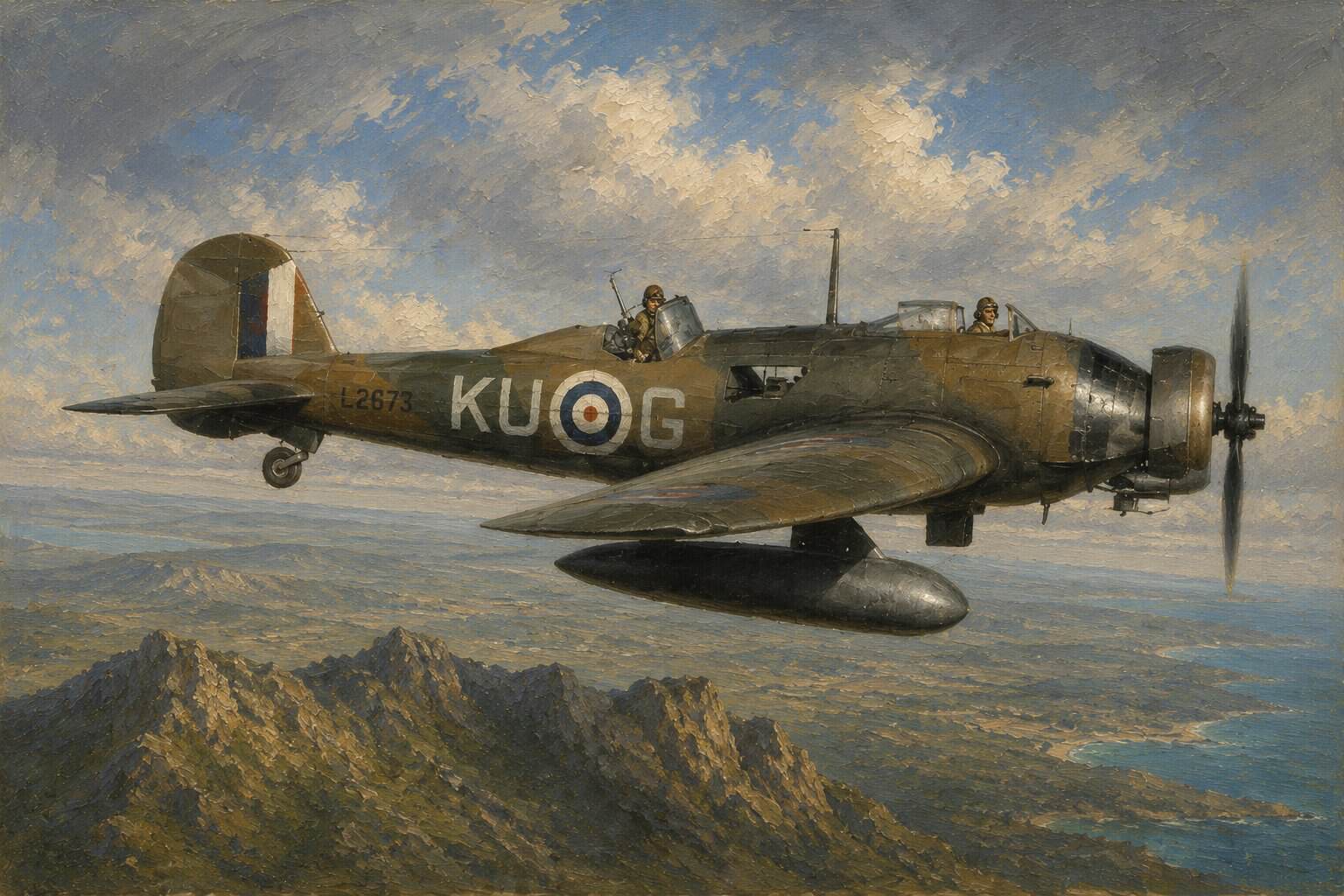
On 5 November 1938, three specially modified Vickers Wellesleys of the RAF Long Range Development Flight left Ismailia in Egypt for Darwin, Australia, beginning an attempt on the world non-stop distance record. The heavily laden aircraft carried additional fuel and three-man crews for a journey expected to extend across two days. Their departure opened the decisive stage of a programme devoted to the practical problems of very long-distance flying.
The attempt brought together aircraft preparation, navigation, fuel economy and crew endurance. Darwin lay thousands of miles beyond the starting point, making the management of the aircraft throughout the flight central to its success. The record would be secured when two of the Wellesleys reached Australia on 7 November.
Preparing the Long Range Development Flight
Created in 1938, the Long Range Development Flight investigated the techniques needed to sustain aircraft over exceptional distances. Its commander, Squadron Leader Richard Kellett, led a specialised undertaking in which the endurance of a service aircraft became the subject of concentrated development work.
The Vickers Wellesley offered useful qualities for this purpose. Its large wing and geodetic structure gave it considerable range potential, while modification provided the additional fuel capacity required for the experiment. The aircraft’s bomber origins also gave the work direct relevance to the RAF’s interest in extending the reach of its forces.
Preparation had already included a substantial demonstration. On 7–8 July 1938, four Wellesleys flew from RAF Cranwell to Ismailia in Egypt, covering approximately 4,300 miles in 32 hours. The flight tested long-distance formation flying, fuel economy and engine endurance, providing valuable experience before the more ambitious attempt from Egypt to northern Australia. The November attempt increased both the distance to be covered and the time that crews and aircraft would have to remain effective.
From Ismailia towards Australia
Three aircraft began the flight from Ismailia under Kellett, Flight Lieutenant H. A. V. Hogan and Flight Lieutenant A. N. Combe. Each carried a three-man crew. The additional fuel made careful preparation essential, while the duration placed sustained demands on navigation and the economical operation of the aircraft.
For the Flight, the journey was a practical examination of long-range technique. Fuel consumption and progress along the route determined whether the planned destination remained within reach. Crew endurance formed part of the same problem: the aircraft had to be managed throughout a flight lasting approximately 48 hours.
Flight Lieutenant H. A. V. Hogan’s Wellesley, L2639, landed at Koepang, now Kupang, in Timor to refuel before continuing to Darwin. The aircraft commanded by Squadron Leader Richard Kellett and Flight Lieutenant A. N. Combe completed the journey without stopping. The different outcomes demonstrated the importance of fuel reserves during an attempt conducted close to the aircraft’s endurance limits.
A record completed at Darwin
On 7 November, the two Wellesleys reached Darwin after approximately 48 hours in the air. The officially recognised distance was 7,158 miles, or 11,520 kilometres, although the aircraft’s actual route was longer. Their arrival established a new world non-stop distance record, completing the attempt begun at Ismailia two days earlier.
The achievement gave the RAF a concrete demonstration of the endurance obtainable through specialised preparation and disciplined long-distance operation. A bomber adapted for development work had crossed the distance between Egypt and northern Australia in a single flight. The programme brought together the aircraft’s range potential with the practical skills needed to exploit it: fuel management, navigation and sustained crew performance. The departure on 5 November set those preparations against the demands of the full journey to Darwin.