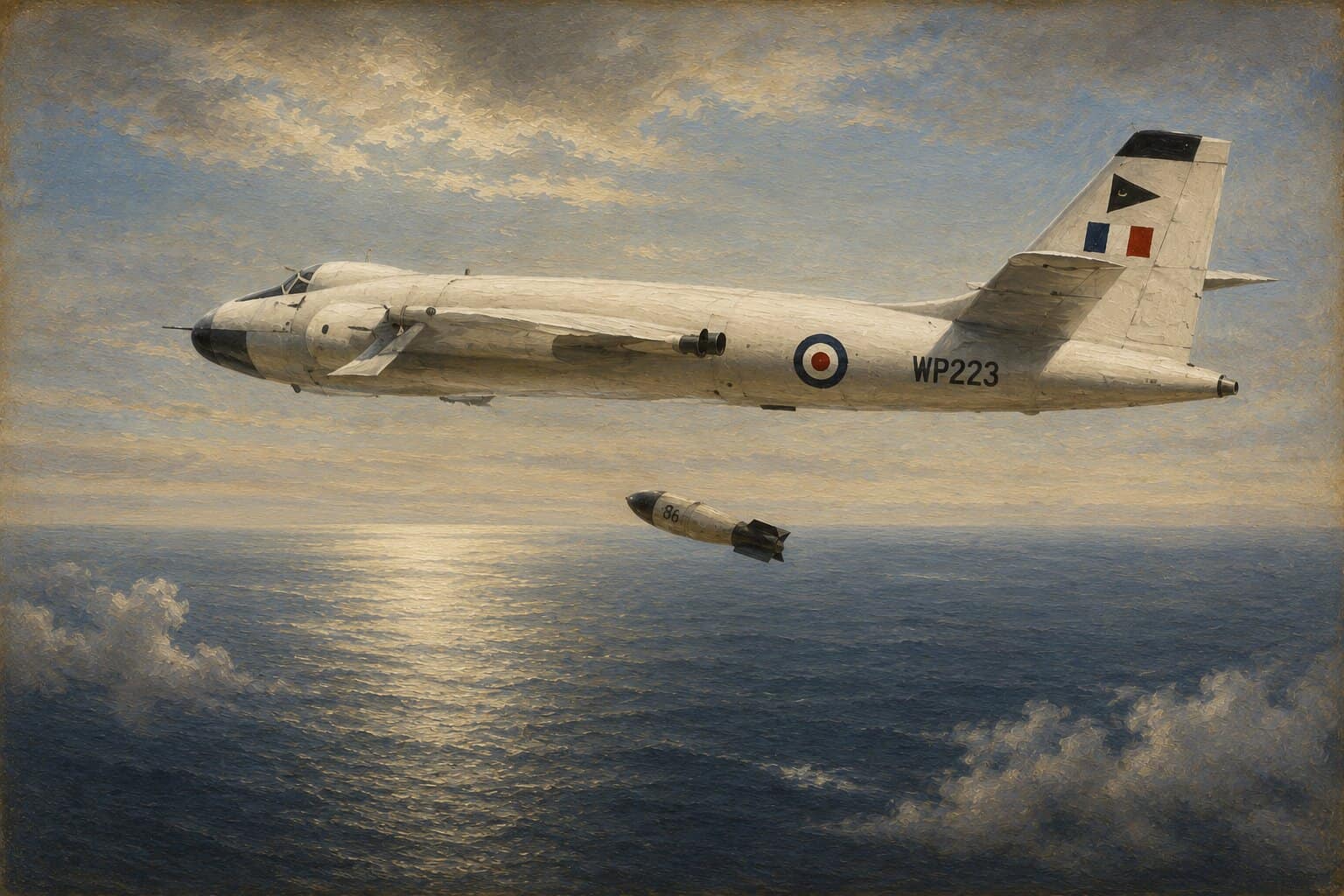
On 11 October 1956, Vickers Valiant WZ366 of No. 49 Squadron dropped a live Blue Danube atomic bomb over Maralinga in South Australia. Captained by Squadron Leader E. J. G. Flavell, the aircraft carried out Britain’s first live air-dropped atomic weapon test. The flight formed part of Operation Buffalo and brought an RAF V-bomber and its nuclear weapon together in an airborne trial.
The event marked a distinct stage in the development of Britain’s nuclear forces. The first British atomic explosion had taken place in 1952. Four years later, the Maralinga drop demonstrated delivery from an aircraft, connecting the nuclear testing programme with the bomber force intended to carry the weapon in service.
No. 49 Squadron at Maralinga
The test took place at the Kite site on the Maralinga range. Its designation, Buffalo/R3, placed it within the British atomic trials being conducted in Australia. Flavell and his crew flew WZ366 as the delivery aircraft, giving No. 49 Squadron a central role in this stage of the programme.
Blue Danube was the weapon associated with the RAF’s early nuclear bomber capability. For the Maralinga trial, a modified Blue Danube round was carried and released by the Valiant. The resulting atomic explosion completed the first British test in which the live weapon had been delivered from the air.
The combination of aircraft, crew and bomb was central to the event’s significance. An airborne trial involved carrying the weapon to the test area and releasing it in flight. It therefore exercised a practical part of the delivery process on which the RAF’s emerging strategic role depended. WZ366’s mission gave that process a concrete demonstration under test conditions.
The Valiant and the nuclear bomber force
The Valiant was the first of Bomber Command’s V-class aircraft. Its introduction placed a jet bomber at the centre of Britain’s airborne nuclear deterrent, during a period when aircraft performance and the destructive power of nuclear weapons were reshaping strategic planning.
The V-force initially relied on speed and high-altitude performance to penetrate Soviet air defences and deliver nuclear weapons. The Valiant’s place in this force made its selection for a live atomic drop directly relevant to the RAF’s principal Cold War responsibility.
At Maralinga, that wider strategic purpose was expressed through a specific experimental flight. No. 49 Squadron supplied the aircraft and aircrew that carried the bomb into the trial. The successful drop demonstrated the airborne delivery element of a capability whose credibility also depended on trained crews, serviceable aircraft and the wider organisation supporting them.
A milestone in deterrent development
Operation Buffalo belonged to the British atomic testing programme in Australia. The Maralinga setting remains integral to the event: this was a nuclear explosion conducted on an Australian test range, with the destructive effects and radiological hazards inherent in such testing.
For the RAF, 11 October established a clear milestone in the practical development of its nuclear bomber force. Britain’s earlier atomic explosion had demonstrated the weapon principle; the flight by Flavell’s crew demonstrated delivery of a live British atomic weapon from a Valiant. WZ366 and No. 49 Squadron thus linked the test programme to the airborne means of delivery on which Britain’s early nuclear deterrent rested.