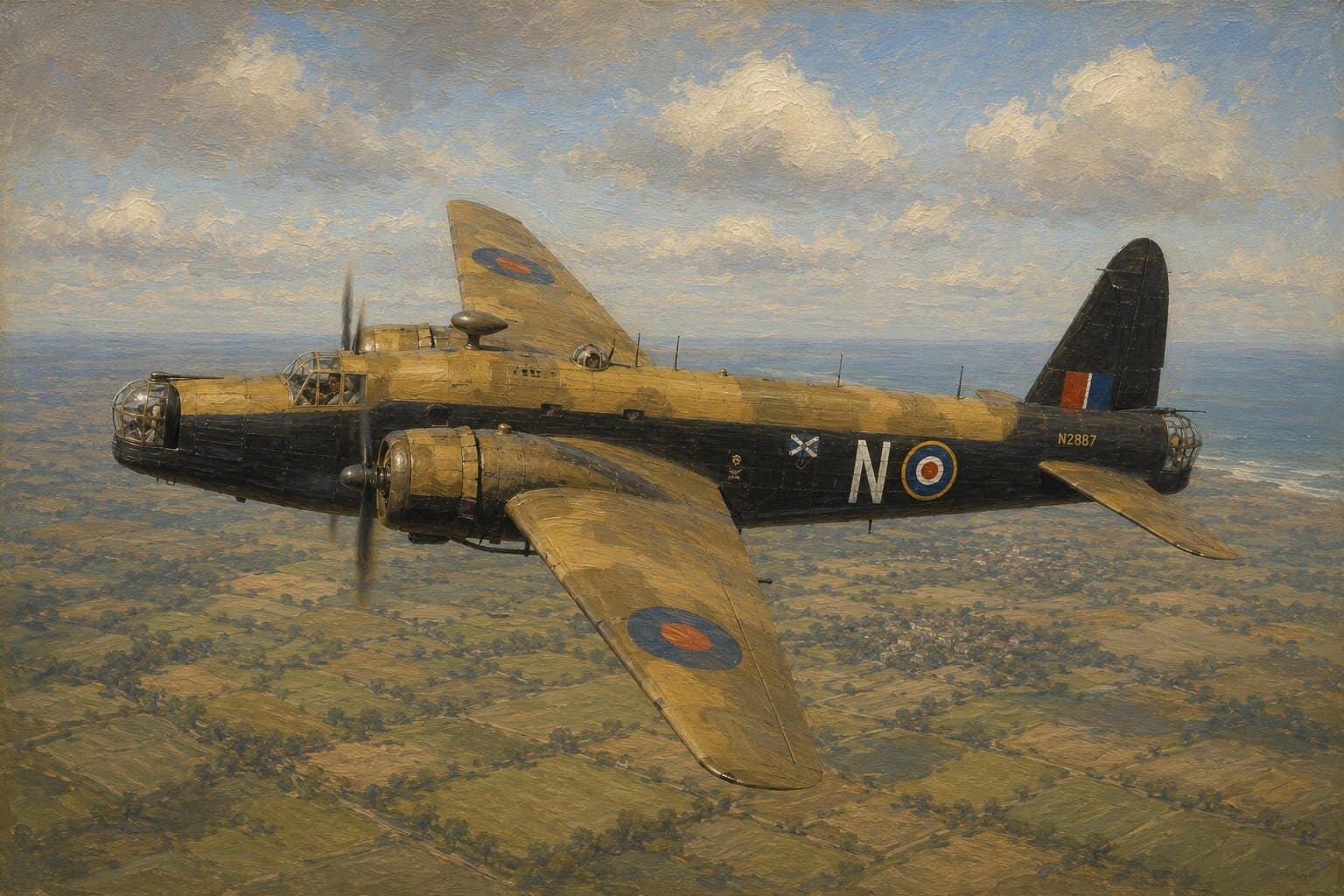
On 16 September 1935, 38 Squadron was activated at RAF Mildenhall, adding a new bomber unit to one of the RAF’s expanding pre-war stations. The event reflected the wider rearmament of the mid-1930s, when bomber strength was being rebuilt in response to a worsening European security climate. As an On This Day subject, the squadron’s activation offers a useful point of entry into the RAF’s expansion before the Second World War.
Rearmament in the mid-1930s
By 1935, Britain was no longer able to treat European instability as a distant concern. The deterioration of the international situation encouraged a renewed emphasis on military preparedness, and the RAF formed part of that shift. Expansion was not only about new aircraft. It also required stations, units, training structures, and a larger organisational framework capable of sustaining more ambitious air plans.
The activation of 38 Squadron is part of this process. It demonstrates how rearmament took institutional form through the creation or revival of units at growing stations such as Mildenhall. What later generations would remember through major wartime campaigns began in quieter steps of this kind: administrative decisions, station development and the gradual rebuilding of service strength.
RAF Mildenhall’s place in expansion
Mildenhall was one of the stations associated with the RAF’s pre-war enlargement. Its significance lay not merely in geography, but in its role as part of a broader network supporting bomber growth. The activation of a bomber squadron there therefore had meaning beyond one unit’s history. It showed the Service preparing material and institutional foundations before the war broke out.
That matters in RAF history because pre-war development is often overshadowed by wartime performance. Yet squadrons such as 38 did not appear fully formed in 1939. Their existence, training culture and station infrastructure were products of years of preparation.
Why unit activation mattered
The creation of a squadron is historically important not because it is dramatic in itself, but because it indicates intention. A new bomber unit represented aircraft to be crewed, doctrine to be practised, and strategic assumptions to be embodied in service organisation. In 1935, bomber expansion carried particular weight because British thinking still placed heavy emphasis on bombers' role in deterrence and war planning.
Thus the activation of 38 Squadron can be read as part of a larger statement about what the RAF expected modern conflict to require. The Service was not merely preserving existing strength. It was actively enlarging its offensive and deterrent capacity.
Significance
The activation of 38 Squadron at RAF Mildenhall on 16 September 1935 matters because it shows British rearmament taking practical shape inside the RAF. It reflects the rebuilding of bomber strength during a tense and uncertain decade and reminds the reader that wartime capability began with pre-war institutional growth. In RAF history, the event stands as one of the many quieter markers of expansion that made the Service better prepared for the conflict that followed only four years later. It also highlighted how station growth and squadron growth advanced together.