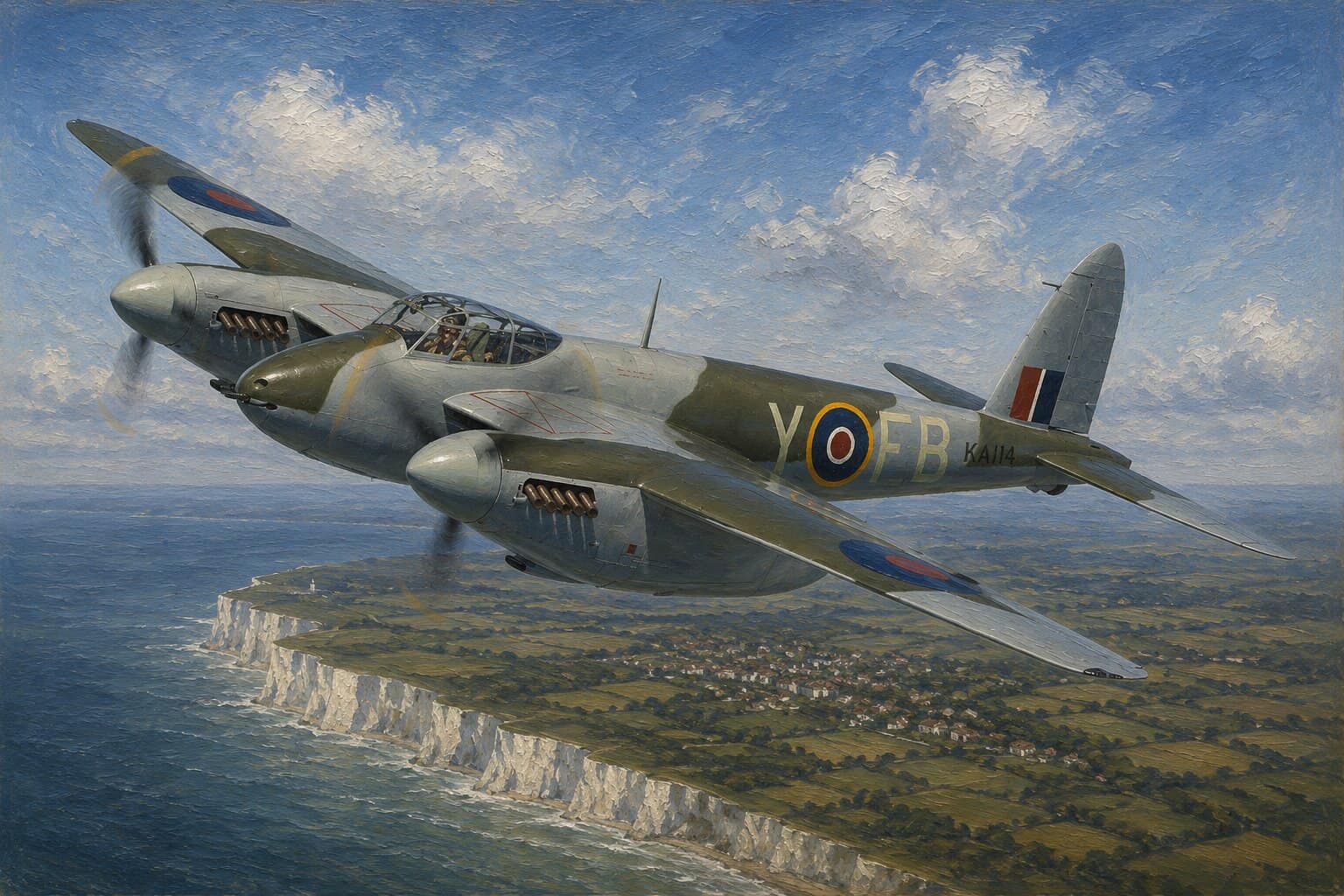
RAF aircraft structures were never simply a matter of engineering practice. Airframe design determined speed, payload, durability, repairability and the chances of bringing a damaged aircraft and its crew home. Across the RAF's history, the move from fabric-covered structures to stressed-skin metal construction and the continued use of specialised materials where they offered operational advantage shaped both aircraft performance and survivability in service.
Background
The early RAF inherited construction methods from the First World War. Wood frames, wire bracing and fabric covering remained common because they were familiar, relatively light and straightforward to repair. Those methods suited the modest speeds and loads of the interwar period, but they imposed limits. As aircraft became faster and heavier, and as military flying demanded greater range, altitude, and firepower, RAF types needed stronger structures capable of withstanding higher aerodynamic and operational stresses.
By the late interwar years, the service was operating aircraft that reflected different stages of that transition. The Hawker Hurricane retained a mixed structure with fabric-covered rear sections and a metal forward fuselage, while the Supermarine Spitfire represented a more advanced stressed-skin monoplane approach. Each had operational consequences. The Hurricane was comparatively simple to repair after combat damage, which mattered in sustained fighter operations, while the Spitfire offered the aerodynamic efficiency demanded by high-performance interception.
Materials And Construction
Material choice in RAF service followed operational need rather than a single linear idea of progress. Aluminium alloys became central because they combined strength with comparatively low weight, allowing thinner wings, cleaner fuselage lines and larger internal fuel or armament loads. Stressed-skin construction distributed loads through the outer skin and the underlying frame, producing stronger and more efficient airframes than older braced arrangements.
That did not make earlier or alternative materials irrelevant. Wood continued to have value where weight, manufacturing capacity or aerodynamic form made it useful. The de Havilland Mosquito remains the clearest RAF example. Its wooden construction was not a retreat into outdated practice but a practical response to wartime industrial pressure and aerodynamic requirements. The result was an aircraft that combined speed, useful load and versatility in a way that served bomber, reconnaissance, intruder and night-fighter roles.
Large bombers demonstrated a different structural problem. Aircraft such as the Avro Lancaster required airframes capable of carrying heavy loads over long distances while remaining repairable under the strain of repeated operations. Strong wing spars, robust fuselage construction and sensible access for maintenance all mattered as much as headline performance figures. RAF structural design therefore had to balance theoretical efficiency with the realities of fatigue, battle damage and servicing on dispersed stations.
Damage, Repair And Survivability
Survivability in RAF service depended partly on armour, self-sealing tanks and crew protection systems, but it also depended on the structure itself. An aircraft that could absorb local damage without immediate failure, or one that allowed rapid replacement of damaged fabric, panels or control surfaces, offered a clear operational advantage. In the Battle of Britain and later campaigns, repairability affected sortie generation as well as survival in the air.
Structural resilience was especially important in bomber and maritime operations, where aircraft might have to remain controllable after flak hits, gunfire, or heavy-weather damage far from base. Design margins, redundancy in control runs and the integrity of major load-bearing members all shaped whether a damaged aircraft could continue flying. The RAF did not require indestructible airframes, which were impossible to achieve without unacceptable weight, but it did require aircraft strong enough for hard operational use and practical enough to return to service after repair.
Post-war development brought improved alloys, new manufacturing techniques and better understanding of fatigue. Jet aircraft imposed greater thermal, speed and pressurisation demands, while low-level operations later placed intense stress on wings and fuselage structures. Types such as the English Electric Canberra, Panavia Tornado and Eurofighter Typhoon therefore belonged to a structural tradition in which survivability meant not only resisting enemy action but withstanding a harsh operating envelope over a long service life.
Significance
For the RAF, structural development was inseparable from operational capability. Aircraft structure determined what engines, fuel loads, weapons and equipment could be carried, how much punishment a type might endure, and how quickly damaged machines could be restored to service. It also shaped procurement choices, because an elegant design that proved difficult to maintain or vulnerable to fatigue was of limited military value.
Throughout the Air Force's history, survivability has come from a combination of design strength, material choice, redundancy, and repairability. The most successful RAF aircraft were rarely those with the most novel structure in isolation. They were the aircraft whose construction matched the demands of interception, bombing, maritime patrol or strike operations with sufficient durability to remain effective in sustained service.