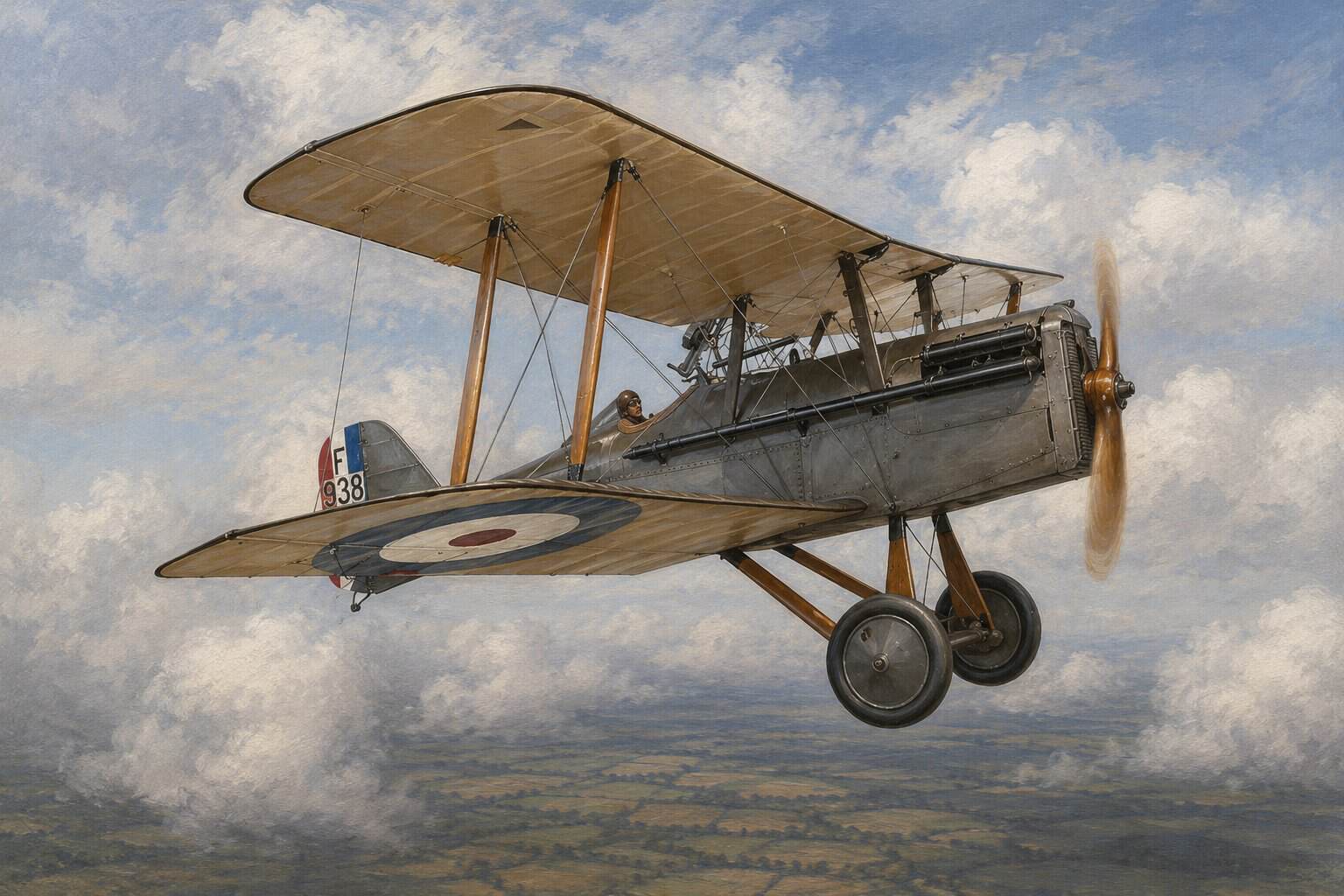
On 26 July 1918, Major Edward “Mick” Mannock VC, one of Britain’s greatest First World War fighter aces, was killed near Lestrem after claiming what became his sixty-first victory. His death came at the height of a remarkable combat career and carried an obvious symbolic weight. Mannock had become one of the outstanding leaders of the Royal Air Force’s formative wartime generation, admired not only for his score but for his tactical intelligence, discipline and concern for the survival of less experienced pilots.
A fighting leader of unusual influence
Mannock’s reputation rested on more than numbers. Like several of the leading aces of 1917 and 1918, he helped shape the practical doctrine of air fighting at a time when it was still being learned in battle. He emphasised height, surprise, teamwork and situational awareness, and he was notably serious about the dangers of carelessness or bravado. That combination of aggression in combat and caution in method made him an influential squadron and flight commander.
His achievements were considerable, but they were hard won. First World War air combat remained physically exhausting, tactically unforgiving and often very brief in decision. Even the most successful pilots lived with the constant likelihood that one mistake, one mechanical failure or one burst of ground fire could end a career instantly.
The final sortie
On 26 July, Mannock took part in an offensive patrol over the battle area in northern France. After attacking enemy machines and claiming another success, he was hit by ground fire near Lestrem and did not return. Accounts of the precise final moments have varied over time, but the essential fact is clear: one of the RAF’s most effective combat leaders was lost not in a carefully staged duel, but in the hazardous and untidy conditions of low-level warfare over the Western Front.
That in itself says much about the period. Air fighting in 1918 was inseparable from the ground battle below. Aircraft ranged over the lines in support of wider operations, and danger came from the earth as well as from enemy pilots. Survival could never be guaranteed by skill alone.
Why Mannock mattered
Mannock’s significance to RAF history lies partly in timing. He belonged to the generation that bridged the Royal Flying Corps and the newly formed Royal Air Force, and his death came only months after the RAF itself had been created. Figures such as Mannock gave the young service much of its early legend, but also much of its hard-earned practical knowledge.
He is also important because he represented a mature form of fighter leadership. Mannock understood that victory in the air depended on observation, discipline and teamwork as much as individual daring. That made him more than a celebrated ace. He was a teacher of combat methods.
Loss at the height of success
The death of Edward Mannock remains one of the most striking reminders of the fragility of even the greatest wartime reputations. He was at the peak of his record, honoured with the Victoria Cross and already established as a leading figure in British military aviation, yet he was still vulnerable to the ordinary hazards of battle.
In wider air-war terms, 26 July 1918 illustrates the brutal mathematics of early air combat. Experience could improve survival, but it could not abolish risk. Mannock’s final day belongs not only to the story of one famous ace, but to the larger story of a generation whose tactical innovations were written in success, exhaustion and loss.