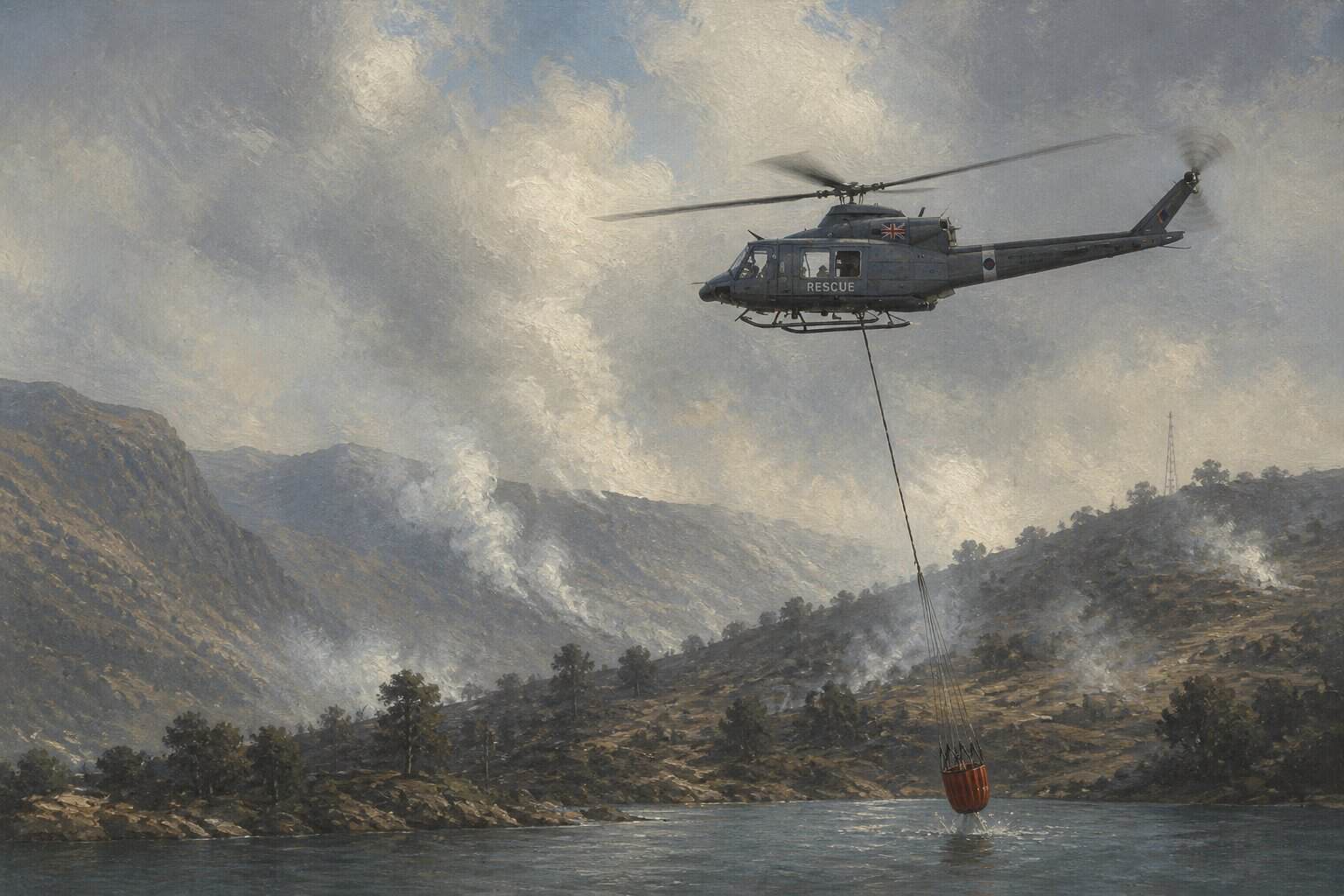
On 27 June 1995, helicopters of No. 84 Squadron based at RAF Akrotiri were called into one of those peacetime emergencies that reveal the everyday value of military aviation just as clearly as war. As major wildfires spread in Cyprus, two Westland Wessex helicopters joined the firefighting effort and, over forty-three hours of intense flying, dropped some 80,000 gallons of water. It was reported as the island’s worst fire for a century.
An RAF squadron in a civil emergency
No. 84 Squadron had long been associated with rotary-wing operations in Cyprus, combining search and rescue duties with the wider practical support tasks that come with an overseas station. That made the squadron especially useful when a fast-moving emergency demanded aircraft, crews and local knowledge at short notice.
Wildfire operations are very different from routine transport or rescue flying. They require repeated low-level work in heat, smoke, and rough terrain, with crews managing limited visibility, changing wind conditions, and the constant pressure of timing. The objective is not a single spectacular action but the patient delivery of hundreds of accurate water drops where they can slow, contain or divert the fire front.
The Wessex at work
The Westland Wessex was well suited to this sort of task. A robust helicopter with a strong service history, it could carry underslung loads and operate effectively in demanding conditions. In Cyprus, the aircraft used ‘rainmaker’ buckets, lifting water and returning to the fire line again and again. The figure of 80,000 gallons over 43 hours conveys the sustained effort involved. This was not a symbolic intervention; it was a sustained operational contribution to saving land, property, and potentially life.
Such work also demonstrated the flexibility expected of RAF helicopter units overseas. Aircraft primarily held for defence, support, and rescue roles could be redirected quickly to meet a local humanitarian need. That adaptability is one of the defining strengths of rotary-wing air power, especially at a station like Akrotiri, where British forces remain closely tied to the island's broader circumstances.
Results beyond the immediate crisis
The most obvious result was practical help against a major fire. Yet the significance ran further than the gallons dropped. Operations of this kind reinforced the value of the RAF’s permanent presence in Cyprus, not simply in military terms but in the sense of being able to assist the host region in moments of sudden pressure.
For local communities, the sight of military helicopters fighting a fire is a direct reminder that air forces do more than prepare for conflict. For the squadron, meanwhile, such sorties demanded the same professionalism found in more obviously martial tasks: planning, crew coordination, judgement under pressure and sustained flying discipline.
A wider reflection on modern RAF service
By the mid-1990s, the RAF was operating in a strategic environment very different from that of earlier Cold War decades. Even so, overseas bases and support helicopters remained important because they allowed Britain to respond rapidly to emergencies, instability and humanitarian demands. Cyprus was one of those places where the distinction between military readiness and public service could become very narrow.
The events of 27 June 1995, deserve remembrance not because they were part of a battle, but because they showed another side of RAF effectiveness. No. 84 Squadron’s Wessex crews used skill, endurance and local responsiveness to confront a serious natural disaster, demonstrating that air power can protect communities as well as defend them.