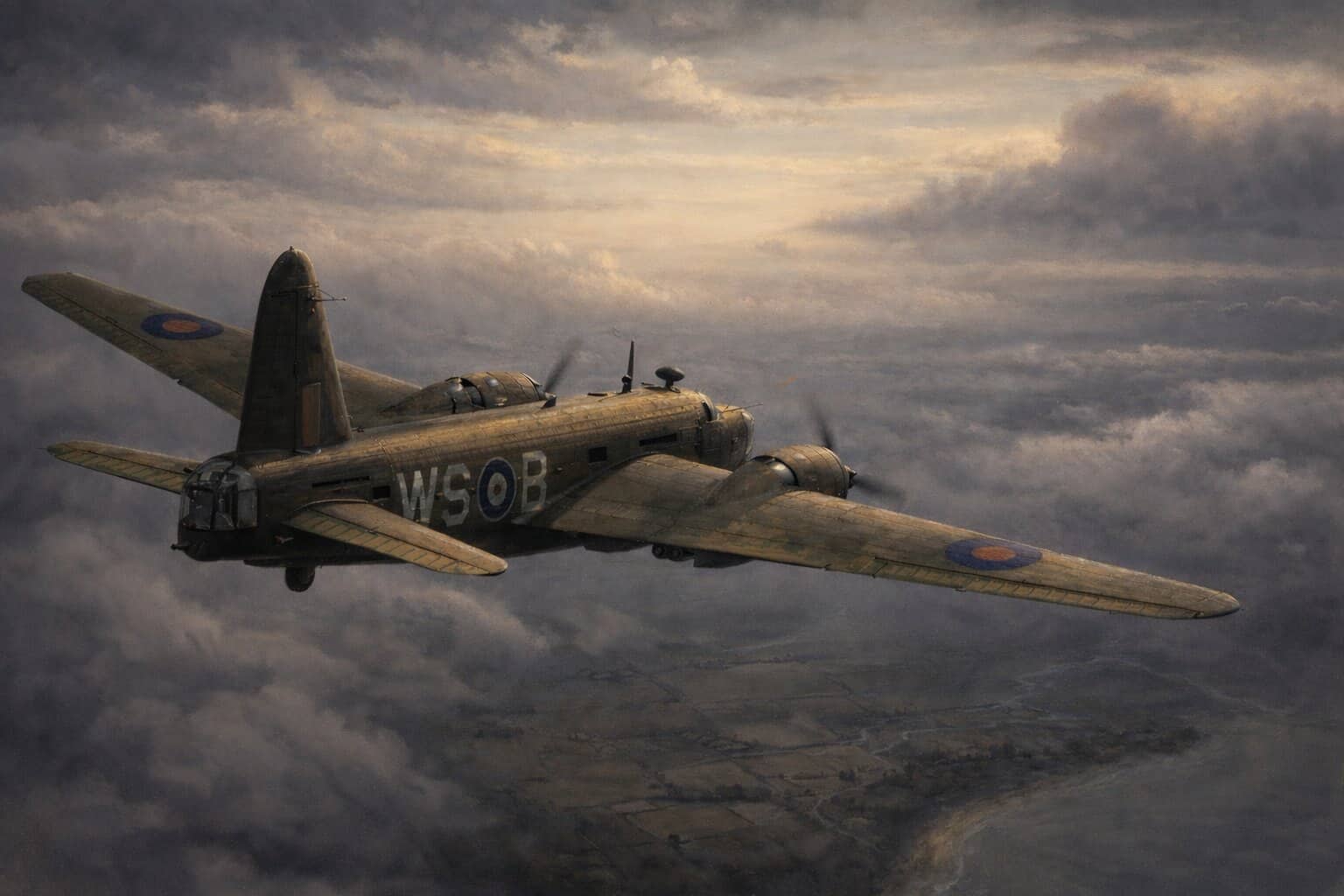
On 7 April 1940, No. 115 Squadron sent Vickers Wellington bombers from RAF Kinloss on operations over the North Sea and Denmark. The day ended in loss. Two aircraft, N2949 and P2524, were brought down by German Bf 110s and all 12 crew were reported missing. Those are the stark facts of the loss. Yet behind it lies a stark reminder of the risks faced by RAF bomber crews in the opening phase of the war in northern Europe, on the eve of the Norwegian Campaign.
This moment came as the strategic situation in Scandinavia and the northern seas was rapidly worsening. RAF aircraft were being committed to reconnaissance, attack and patrol work in an environment shaped by distance, uncertain weather and growing enemy air opposition. Bomber crews operating over the North Sea had to contend not only with the enemy but with the sea itself. Navigation, fuel judgement and the prospect of rescue all carried special weight once an aircraft was lost or damaged far from land.
The danger from the Bf 110
German Bf 110s were responsible for the destruction of both Wellingtons. That detail is significant. The Luftwaffe employed the twin-engined Bf 110 as a long-range heavy fighter, and in the early war period, it could be a serious threat to bomber formations lacking strong protection. The Wellington was a capable medium bomber, but crews in 1940 were still learning hard lessons about interception, formation discipline and the realities of daylight operations against an alert enemy.
To lose two aircraft in a single operation was a severe blow for any squadron. It immediately reduced strength, burdened comrades with grief and uncertainty, and underscored how quickly operational routine could turn fatal. The naming of the aircraft serials has a powerful effect. It fixes the event in the historical record with precision while also reminding us that each machine carried individual men whose fate, at least initially, was reported simply as missing.
Missing over sea and enemy territory
That word “missing” deserves attention. In the air war of 1940, it often concealed terrible finality. When aircraft failed to return from operations over the sea or hostile territory, answers were slow and sometimes incomplete. Families and units could be left in suspense. For comrades on the station, the absence of an aircraft from dispersal or landing pattern was itself the first announcement of loss.
Operations over the North Sea and Denmark sharpened that uncertainty. An aircraft might be shot down by fighters, forced into the sea, or lost without witnesses. Rescue chances were often slim. The record of all 12 crew missing reflects not only enemy success, but the unforgiving operational geography of the theatre. Early-war RAF service in the north was marked by precisely this combination of danger, distance and incomplete knowledge.
Remembering the squadron’s sacrifice
The significance of 7 April 1940 lies not in a dramatic victory, but in the sober reality of service and loss. No. 115 Squadron was carrying out the tasks asked of Bomber Command at a critical moment, when the wider conflict in Scandinavia was moving towards open confrontation. The cost was immediate and severe.
Such episodes matter because they show the war as operational units experienced it: demanding, uncertain and often cruelly sudden. The loss of N2949 and P2524, with all 12 men missing, was one of the many blows the RAF absorbed in 1940 before later narratives of endurance and success took fuller shape. On this day, the record is one of duty undertaken and sacrifice incurred in the hard skies over the northern approaches to Europe.