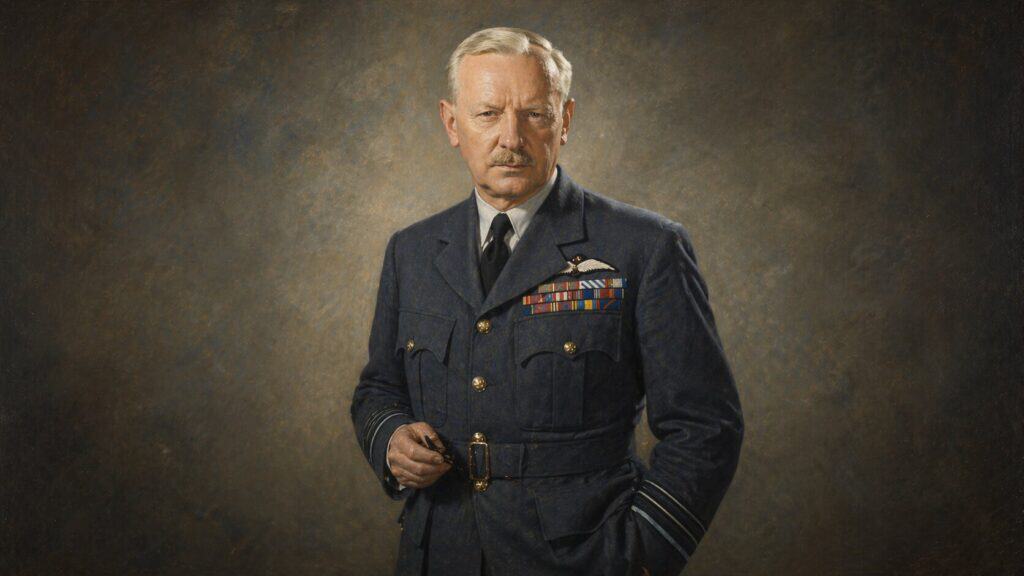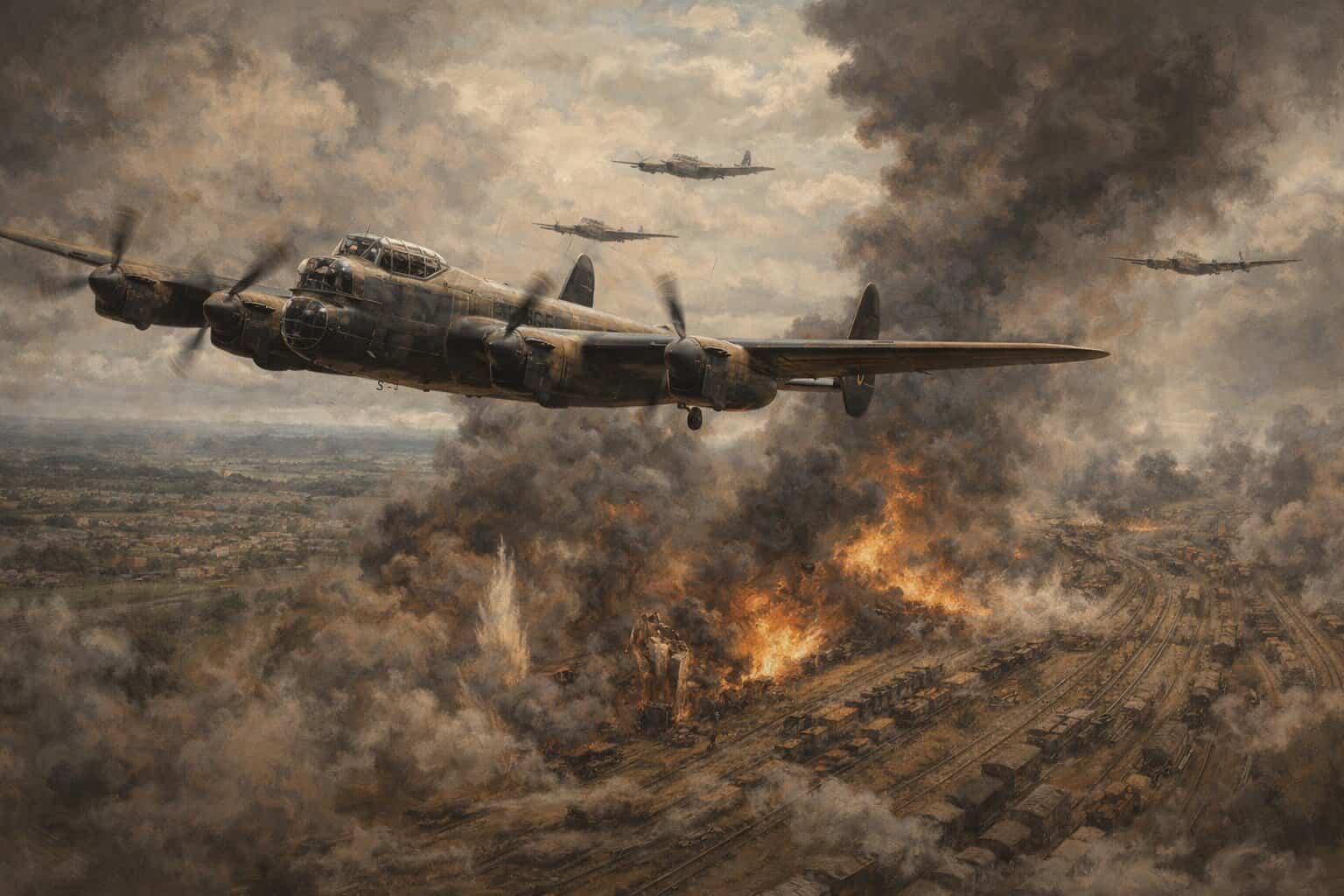
On this day, 6 March 1944, RAF Bomber Command struck the marshalling yards at Trappes, near Paris, in what became the opening blow of the Railway Offensive. The attack marked the beginning of a sustained effort against the transport system that carried German troops, equipment and supplies across occupied France. It was not the largest raid of the war, nor the most dramatic, but it reflected an important shift in air strategy. Rather than concentrating only on factories, cities or major industrial plants, Bomber Command was now being directed towards targets whose destruction could shape the coming campaign in north-west Europe. This shift was closely connected to the Transportation Plan for Operation Overlord, though Arthur Harris remained wary of diverting heavy bombers such as the Avro Lancaster and Handley Page Halifax from other strategic objectives.
Why Trappes Mattered
Marshalling yards were essential nodes in the rail network. At places such as Trappes, freight wagons were assembled, broken up and sent on towards different destinations. Damaging such sites could do more than destroy track and rolling stock in one place. It could throw timetables into confusion, delay military traffic and impose fresh strain on an already pressured system. In occupied France, where the German war effort depended heavily on rail movement, that mattered greatly.
The choice of Trappes signalled a clear operational purpose. The RAF was attacking the machinery of movement itself. If trains could not be formed, routed or turned around efficiently, German commanders would find it harder to reinforce threatened areas or move material quickly to where it was most needed.
A Change in Allied Air Priorities
By early 1944, the air war over Europe had entered a new phase. Allied air power was increasingly tied to the practical requirements of the campaign that would follow on the ground. The bombing of transport targets in France formed part of that wider logic. Rail centres, junctions and repair facilities were becoming military objectives because they underpinned German control and mobility.
The opening of the Railway Offensive demonstrated how Bomber Command could be used to support a broader operational design. Heavy bombers remained capable of inflicting immense destruction. Still, here that destructive power was being applied with a more specific purpose: to weaken the transport arteries on which a defending army relied. The attack on Trappes was therefore important less for drama than for what it announced. It was the start of a deliberate campaign against the enemy’s ability to move.
Results and Significance
The strike on Trappes inaugurated systematic attacks on French transport networks, and that phrase is the key to its significance. Systematic attack meant persistence. One raid alone might cause local disruption, but repeated pressure on rail targets could multiply delays, complicate repairs and force the diversion of labour and resources. In that sense, the Railway Offensive represented attrition applied to infrastructure rather than to front-line formations.
For the RAF, this was another reminder that air power could shape a campaign in indirect yet decisive ways. Bombing did not need to annihilate an army in the field to have strategic value. By damaging the means through which that army was supplied and repositioned, the RAF could help create conditions more favourable to Allied operations elsewhere.
The Wider Air-War Lesson
The opening of the Railway Offensive at Trappes illustrates an enduring truth about the Second World War air campaign: victory often depended not only on spectacular raids, but on attacks against the systems that made modern war possible. Tracks, yards, junctions and rolling stock lacked the symbolic power of famous city targets, yet they were central to the functioning of the German war machine in western Europe.
That is why 6 March 1944 deserves attention. The attack on Trappes was a practical, purposeful operation whose importance lay in what followed. It marked the beginning of a campaign designed to isolate, delay and wear down an occupying force by attacking its transport network. In doing so, it showed Bomber Command adapting its weight and reach to the strategic needs of the moment.