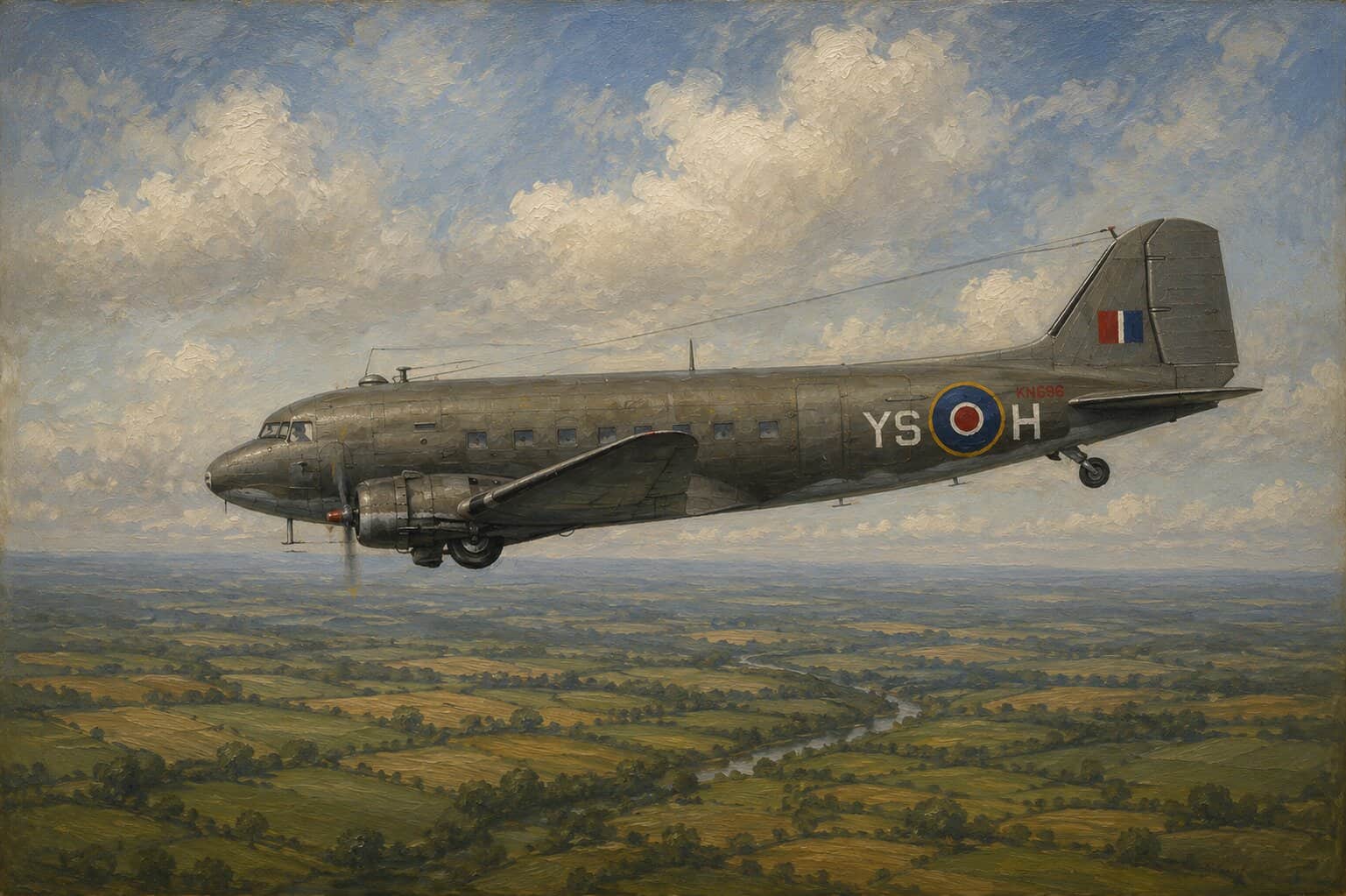
On 4 October 1948, No. 10 Squadron returned to the Royal Air Force order of battle not for bombing or combat, but for one of the defining transport efforts of the early Cold War. Reformed at RAF Oakington to support the Berlin Airlift, and later operating from RAF Lübeck, the squadron became part of the sustained aerial bridge that helped keep West Berlin supplied. Its revival showed how quickly the RAF had to adapt from wartime destruction to post-war endurance.
A Squadron Returns for a New Emergency
The re-formed unit emerged when No. 238 Squadron was renumbered as No. 10 Squadron. That may have looked like an administrative act, but it reflected a much larger operational need. The Berlin Airlift demanded aircraft, crews, ground staff and command structures on a scale that peacetime routines could not easily absorb. Reusing an established squadron identity gave the expanding effort both practical organisation and a recognisable place within RAF service.
The timing mattered. The Second World War had ended only three years earlier, yet Europe was already moving into a new period of tension. The struggle over Berlin became one of the first major tests of Western resolve in the developing Cold War. In that setting, transport flying could not be treated as a secondary function. The ability to move supplies steadily and visibly into a pressured city became a strategic act in its own right.
From Oakington to Lübeck
After reforming at RAF Oakington on 4 October 1948, No. 10 Squadron took its place in the airlift and later operated from RAF Lübeck. Its aircraft were part of the continuous movement required to carry essential goods into the western sectors of Berlin. There was little glamour in that work, but there was relentless pressure. The airlift only functioned if crews, aircraft and ground organisations maintained an exacting rhythm over weeks and months.
That rhythm was the point. Success did not depend on a single dramatic sortie, but on repetition, reliability, and the refusal to let the system fail. Every completed flight added to the cumulative effect of the airlift. In that sense, No. 10 Squadron's contribution was measured not in spectacle, but in consistency. It helped sustain a campaign in which endurance mattered as much as range or payload.
A Cold War Lesson in Air Power
The squadron's re-formation is significant because it marked a clear shift in what RAF air power could mean in the post-war world. No. 10 Squadron had earlier served in bombing and wartime transport roles, yet on this date it was called back for an operation built on logistics rather than attack. The Berlin Airlift showed that aircraft could defend policy and support a population without engaging in combat, provided the service could organise and sustain the effort.
No. 10 Squadron disbanded again in February 1950, so its return for the airlift was brief. Even so, the episode captured an important reality of the first Cold War crisis. The RAF was not only a striking force; it was also a service capable of maintaining pressure through disciplined, continuous transport flying. In the Berlin Airlift, that capacity helped keep West Berlin alive and demonstrated that organised air mobility could carry genuine strategic weight.