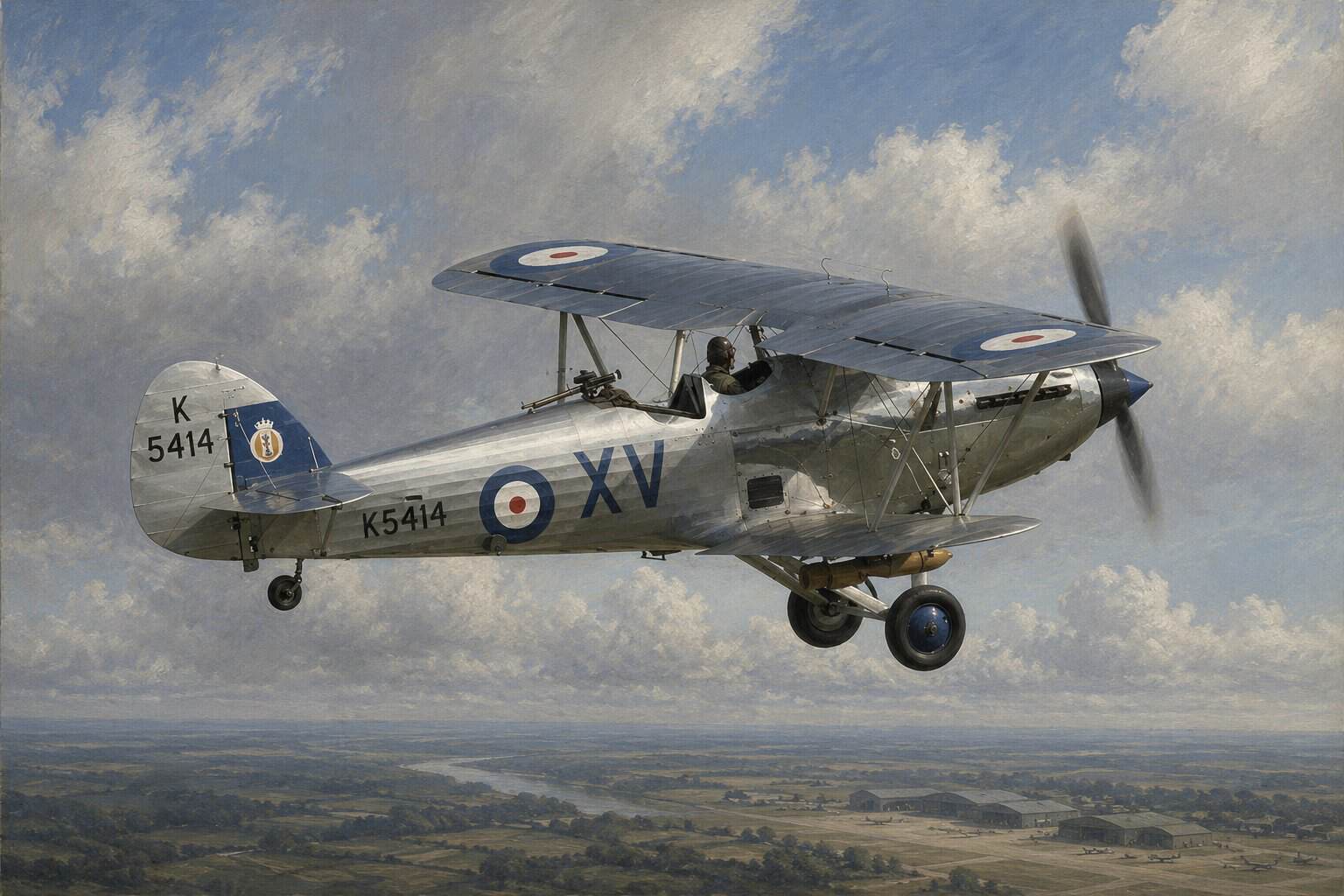
On 14 July 1936, the Royal Air Force reorganised the Air Defence of Great Britain structure into three distinct commands: Bomber Command, Fighter Command and Coastal Command. On paper, this looked like an administrative change, but in practice, it was a major step in preparing British air power for a far more demanding strategic age. As Europe moved deeper into uncertainty, the RAF needed a command system built around distinct operational problems rather than a single broad arrangement trying to do everything at once.
Why the old structure was no longer enough
The Air Defence of Great Britain organisation had been created for an earlier phase of RAF development. By the mid-1930s, however, the service faced a more complex set of responsibilities. Britain required forces for home air defence, long-range offensive bombing and maritime patrol and protection. Those were not merely variations of the same task. Each demanded different doctrine, training priorities, equipment choices and operational habits.
That is what made the July 1936 reorganisation important. It recognised that an expanding air force could no longer rely on a general structure to meet modern threats effectively. The RAF was becoming more specialised, and its command system had to reflect that reality. Bomber Command would concentrate on the offensive striking role; Fighter Command on the defence of British airspace; and Coastal Command on the long, difficult business of maritime air operations.
Three commands for three different problems
The division mattered because each command embodied a different understanding of air power. Bomber Command represented the belief that striking the enemy at a distance might shape a war before armies and fleets settled it. Fighter Command existed because Britain also needed a shield: an organisation capable of intercepting hostile aircraft and defending the country. Coastal Command addressed a third necessity, often overlooked beside the glamour of fighters and bombers, namely the security of the seas around an island nation dependent on trade, convoy routes and maritime reconnaissance.
By separating those roles, the RAF improved not only command clarity but institutional focus. Leadership, planning and resources could be directed more precisely. Aircraft procurement, training, and exercises could be more closely matched to the needs of each branch. In wartime, such distinctions would prove vital. Efficiency at the command level often determines whether air power can be applied coherently under pressure.
Preparing for the storm ahead
With hindsight, the timing appears especially significant. The reorganisation came only a few years before the outbreak of the Second World War. Fighter Command would become central to the defence of Britain in 1940, while Bomber Command and Coastal Command would carry heavy burdens across the wider conflict. None of those later achievements can be understood entirely without recognising the pre-war decisions that shaped the RAF into a more functional force.
This did not mean every difficulty had been solved in 1936. Aircraft design, readiness, doctrine and resources all remained subjects of intense debate. Yet the new command structure gave the RAF a stronger framework within which those arguments could be turned into practical policy. It was an act of preparation rather than a final answer.
A decisive organisational milestone
For RAF history, 14 July 1936 stands as a reminder that institutions fight wars as well as aircraft do. The ability to organise, specialise and command effectively is itself part of combat power. The creation of Bomber, Fighter and Coastal Commands showed that the RAF understood the strategic environment was changing and that air power could not be managed successfully through a single, undifferentiated lens.
Administrative changes rarely attract the fame of combat, yet this one shaped the way the RAF would fight the next war. The command structure created in 1936 became one of the essential foundations of British air operations.