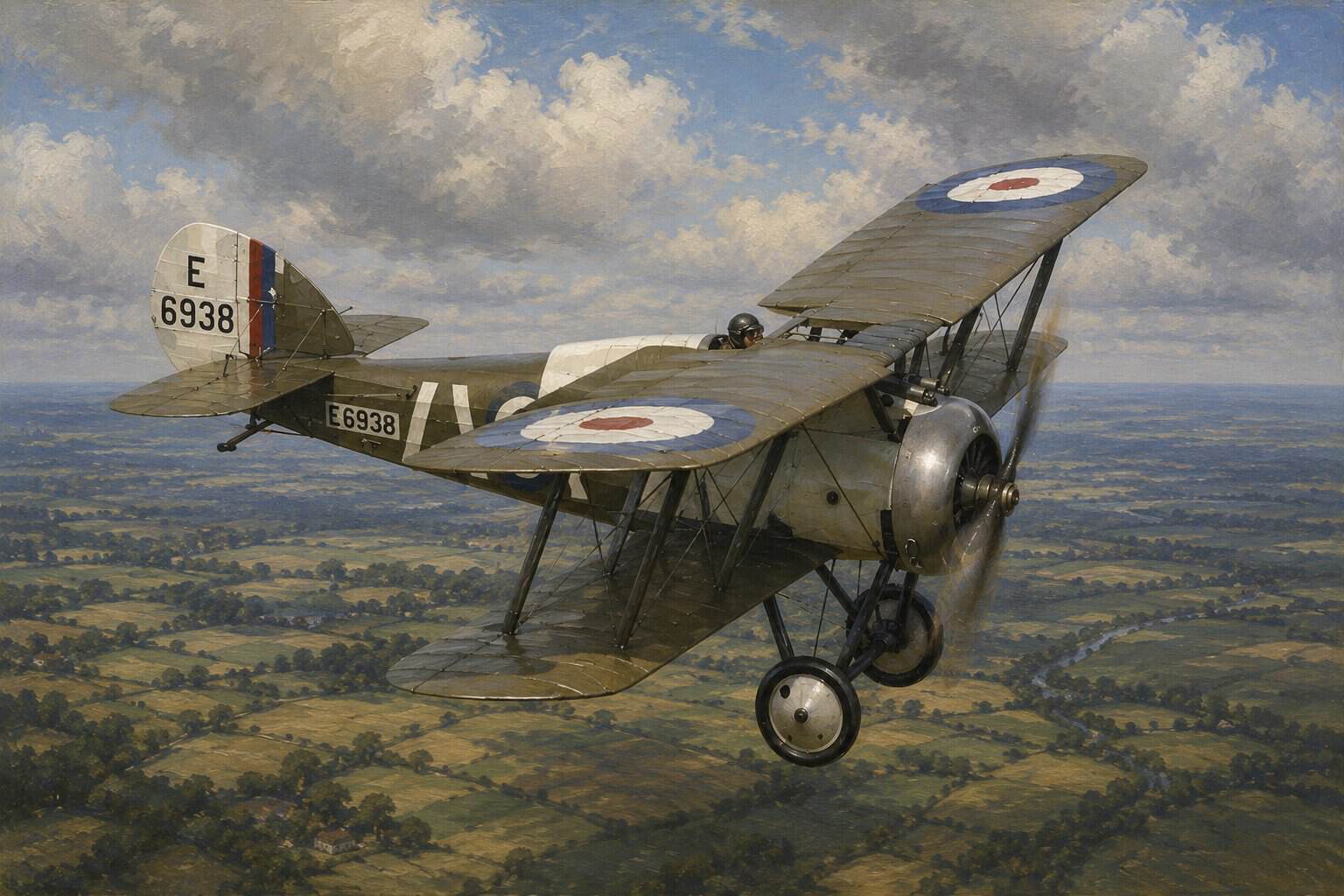
On 21 June 1921, Flight Lieutenant Andrew Beauchamp-Proctor VC was killed in a flying accident while serving with the RAF. His death carried a particular sadness because he had already survived the intense dangers of the First World War and had become one of the outstanding fighter aces of the conflict. The loss was a stark reminder that peacetime flying in the early years of military aviation could still be unforgiving.
A distinguished wartime record
Beauchamp-Proctor had earned a remarkable reputation during the First World War. A South African by birth, he served with great distinction in the Royal Flying Corps and then the Royal Air Force, becoming one of the most successful Allied fighter pilots of the war. His Victoria Cross and numerous other decorations reflected sustained gallantry rather than a single isolated exploit. He belonged to the generation of airmen who helped define fighter combat in its formative years.
That background helps explain why news of his death resonated so strongly. Men like Beauchamp-Proctor were not simply experienced pilots. They were public symbols of courage, skill and the extraordinary pace at which military flying had advanced between 1914 and 1918. In the eyes of many, they had already done more than enough to secure a place in RAF memory.
The risks did not end with the Armistice
Yet aviation after the war remained hazardous. Aircraft were improving, but reliability, instrumentation, airfield infrastructure and flying safety were all still developing. Pilots often operated close to the limits of machines that were comparatively fragile by later standards. The culture of flying also retained something of wartime intensity, with demanding routines and little room for complacency.
Beauchamp-Proctor's death underlined that reality. It showed that the end of combat did not mean the end of danger for those who continued to serve in the air. Accidents could claim highly skilled men just as readily as operational flying had done. In that respect, the inter-war RAF inherited not only wartime experience but also wartime risk.
A loss for the young RAF
The RAF itself was only a young service in 1921. It was still shaping its identity, preserving traditions from the war and deciding how to carry them into the future. Figures such as Beauchamp-Proctor were important to that process because they connected the new service to its formative struggle in the skies over the Western Front. Their presence gave the RAF continuity, prestige and professional example.
His death mattered beyond the personal tragedy. It deprived the service of one of its decorated and proven airmen at a time when such figures could help inspire and steady a still-developing institution. The loss was felt not only by friends and comrades, but by a service conscious of how much it owed to the wartime generation.
Why the moment remains significant
This episode deserves remembrance because it reveals an uncomfortable truth about early air power. Aviation promised speed, reach and modernity, but it also imposed routine exposure to technical and operational danger. The same qualities that made flying heroic could also make it lethal in ordinary service.
Beauchamp-Proctor's death marked the end of an exceptional life, but it also symbolised the cost of remaining in the air after victory had been won. For RAF history, that matters. The service was built not only by celebrated wartime achievements, but by men who continued to fly, train and serve in years when the risks remained high, and the rewards were often quieter. His career and death both belong to that larger story.