On This Day, 1999: On 5 June 1999 RAF Tornados flew their first combat missions from Solenzara in Corsica during Operation Allied…
Read the entry →
Marshal of the Royal Air Force
Charles Portal
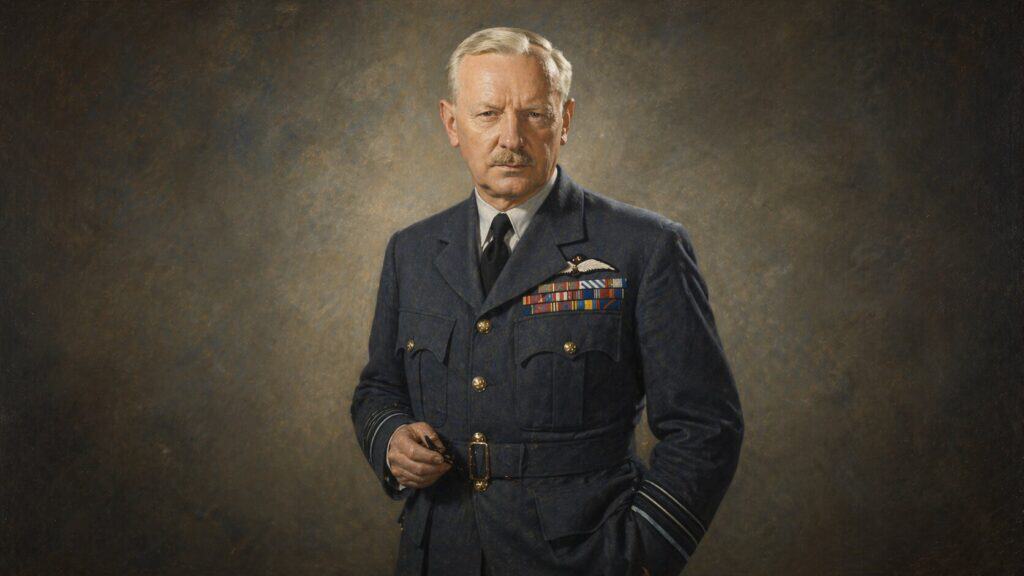
Marshal of the RAF Charles Portal was one of the service’s most important wartime leaders. As Chief of the Air Staff, he shaped RAF expansion, the bomber offensive and Britain’s wider air strategy during the Second World War.
Early Life
Marshal of the Royal Air Force Charles Portal was one of the most important senior leaders in RAF history. Although he is less familiar in popular memory than some wartime commanders, his influence on the shape and direction of British air power in the Second World War was immense. As Chief of the Air Staff for most of the war, he stood near the centre of policy, strategy and inter-Allied planning.
Portal’s significance lies not in one dramatic campaign or personal legend, but in sustained strategic leadership. He was one of the men responsible for turning the RAF from a service facing acute wartime pressure in 1940 into a far larger and more capable instrument of national and Allied power by 1945. For that reason, he belongs among the key figures of wartime RAF command.
Early life and career
Charles Portal was born at Hungerford in Berkshire on 21 May 1893. He served first in the army and then in the Royal Flying Corps during the First World War, gaining operational and command experience that shaped his professional outlook. Like many senior RAF leaders of the Second World War, he emerged from the generation that had seen air warfare evolve rapidly from novelty to a major military arm.
In the interwar years, he continued his RAF career through a series of command and staff appointments. That background gave him a broad understanding of the service at a time when Britain was still defining the future role of independent air power. By 1939, he was already one of the RAF’s most senior and capable officers.
Bomber Command and appointment as Chief of the Air Staff
In 1940, Portal became Commander-in-Chief of RAF Bomber Command. His period in that office was comparatively brief, but it placed him directly within one of the most contentious and important areas of wartime air policy. Later that year, he was appointed Chief of the Air Staff, a post he would hold through the central years of the war.
That move elevated him from command of a single major formation to responsibility for the service’s strategic direction as a whole. It meant dealing not only with bomber operations, but also with fighter defence, overseas commitments, production, manpower and the RAF’s place within Allied grand strategy.
Strategic leadership in war
Portal’s leadership coincided with the period in which the RAF expanded enormously in size, reach and specialisation. Fighter Command defended Britain, Bomber Command developed into a heavy offensive force, Coastal Command gained growing strategic importance, and overseas air forces became essential to campaigns from the Mediterranean to north-west Europe. Portal therefore presided over a service whose responsibilities were both global and increasingly complex.
He was also deeply involved in the air dimension of coalition warfare. Relations with the United States, the direction of the Combined Bomber Offensive and the broader use of Allied air power all required high-level coordination. Portal’s role was therefore political and strategic as well as military. He had to balance British priorities with alliance realities while maintaining the RAF’s standing within national decision-making.
Bomber offensive and controversy
Portal is unavoidably linked to the bomber offensive because of his wartime position. He was not the public face of Bomber Command in the way Arthur Harris became, but he was one of the senior figures responsible for the wider strategic direction within which the campaign developed. That places him within the history of one of the most debated elements of the entire war.
To understand Portal fairly is to see that his responsibilities extended beyond bomber policy alone. Yet the offensive against Germany formed such a central part of British air strategy that it remains one of the principal lenses through which his wartime leadership is judged.
Portal’s place in RAF history
Portal’s historical importance lies in the level at which he worked. He was not primarily a squadron commander remembered for one battle, but a strategic leader whose decisions affected the whole service. That can make him less vivid in popular memory, but it makes his influence much wider.
His career illustrates the extent to which the RAF war effort depended not only on famous commanders in the field, but on senior leadership capable of shaping policy, expanding institutions and managing international strategy. In this respect, he belongs alongside the most important architects of Britain’s wartime air power.
Historical significance
Charles Portal matters because he helped direct the RAF through the decisive middle years of the Second World War. His influence touched organisation, strategy, coalition planning and the broader use of air power in British war policy.
For RAF history, he stands as one of the clearest examples of strategic leadership at the highest level. He is therefore indispensable to any serious understanding of how the wartime Royal Air Force was guided, expanded and employed.
| Dates | Role | Unit | Aircraft |
|---|---|---|---|
| 1914–1918 | Army officer and Royal Flying Corps service | First World War flying and command experience | |
| Interwar period | Royal Air Force officer | Command and staff appointments | |
| 1940 | Commander-in-Chief, RAF Bomber Command | ||
| 1940–1945 | Chief of the Air Staff | Senior RAF leadership throughout the main period of the Second World War |
Charles Portal is remembered as one of the most important senior leaders in RAF history. As Chief of the Air Staff for most of the Second World War, he helped direct the expansion of the RAF, the bomber offensive, the air dimension of Allied strategy and the integration of British air power into coalition war planning.
His historical significance lies above all in strategic leadership. Portal stands at the level of policy, command and inter-Allied coordination rather than squadron-level fame, but his influence on the conduct of the air war was correspondingly wider.
Battle of Britain and the evolution of RAF doctrine
How the Battle of Britain reshaped RAF doctrine in air defence, fighter tactics, command structure and…
19 April 2026 · 5 minU-31 Sunk by RAF Aircraft in an Anti-Submarine First
On 11 March 1940, a Blenheim of No. 82 Squadron sank U-31, the first U-boat destroyed…
11 March 2026 · 3 min“Black Friday” – The Banff Strike Wing Attack at Førde Fjord
On 9 February 1945, RAF Banff Strike Wing attacked German ships at Førde Fjord, suffering heavy…
9 February 2026 · 5 min